Is the Tucson Real Estate Market Shifting Toward Buyers in 2026?
The Tucson real estate market is changing.
Homes are sitting longer, inventory is building, and buyers are starting to gain something they haven't had much of over the past few years: leverage.
If you tried to buy a home in Tucson during the crazier years of the real estate market, you probably remember what it was like. You didn't have much time for a strategy. You had to see homes as soon as they hit the market, make a quick decision, compete with multiple offers, and then pray to the real estate gods above that your offer was accepted.
Today, things feel different.
Buyers are slowing down. They're looking at multiple homes, comparing their options, and, most importantly, negotiating again.
And they're not just negotiating the price.
I'm seeing buyers ask sellers to contribute toward closing costs, complete repairs before closing, help buy down their interest rate, and negotiate other terms that would have been much harder to get just a few years ago. If a home has financed solar panels, for example, a buyer may even ask the seller to pay off the solar system as part of the deal.
So, is Tucson officially a buyer's market?
The answer isn't quite that simple, but the balance is definitely shifting. And one of the biggest reasons is inventory.
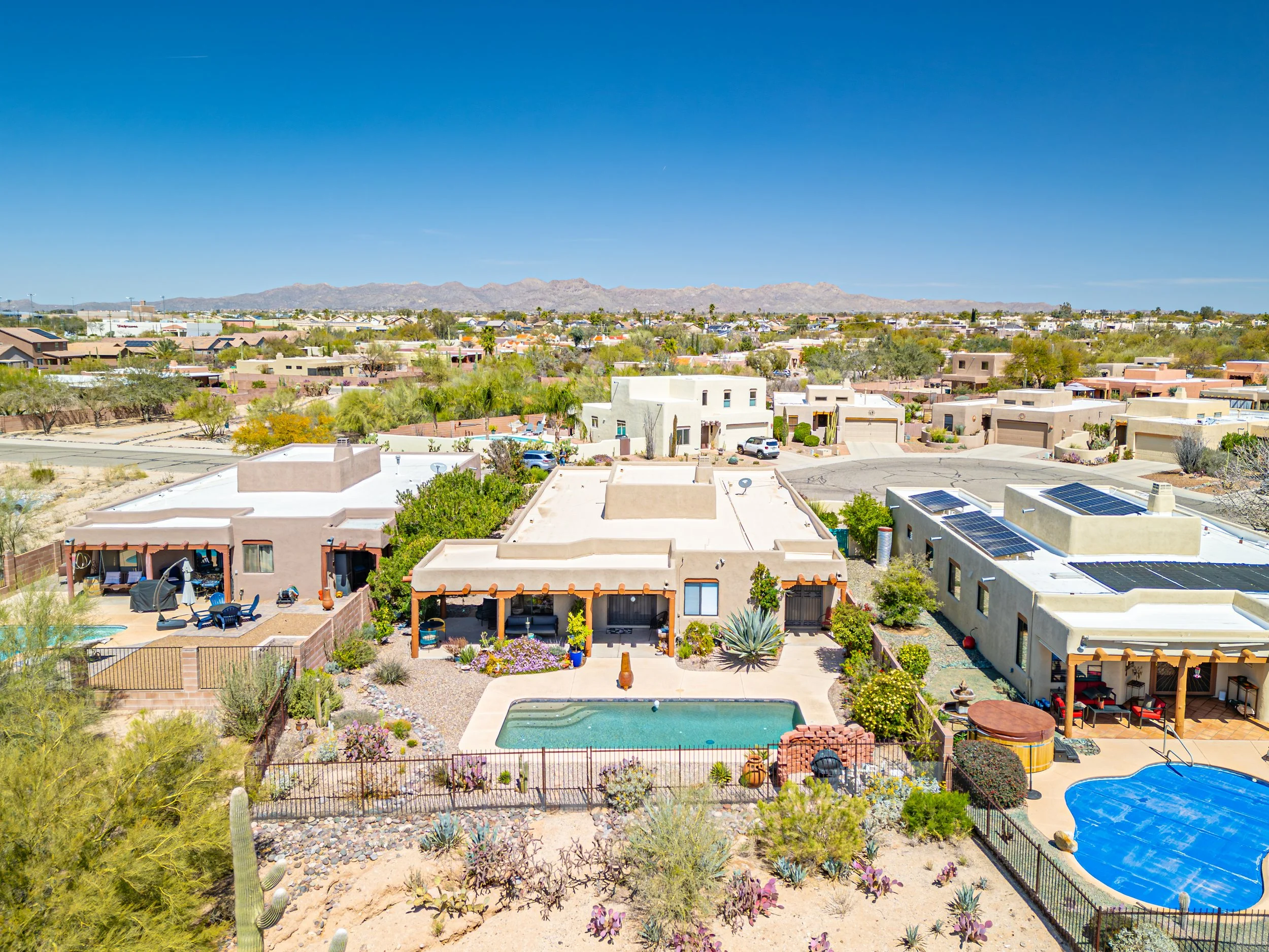
Southwestern homes and desert landscapes in Casas Adobes, with beautiful views of the Mountains in Tucson, Arizona.
More Tucson Homes for Sale Means More Choices for Buyers
Inventory drives almost everything in real estate.
When there aren't enough homes for sale, sellers have the advantage. Buyers compete against each other, prices get pushed higher, and sellers don't have much incentive to negotiate.
When more homes become available, buyers suddenly have options.
And options change everything.
Instead of thinking, We have to buy this house because who knows when another one will come along? buyers can say, Well, we like this one, but there are three others we'd like to see too.
That's a major psychological shift in the Tucson housing market.
Right now, we're seeing increased competition from both resale homes and new construction, giving buyers more choices and forcing sellers to think more carefully about their pricing and strategy.
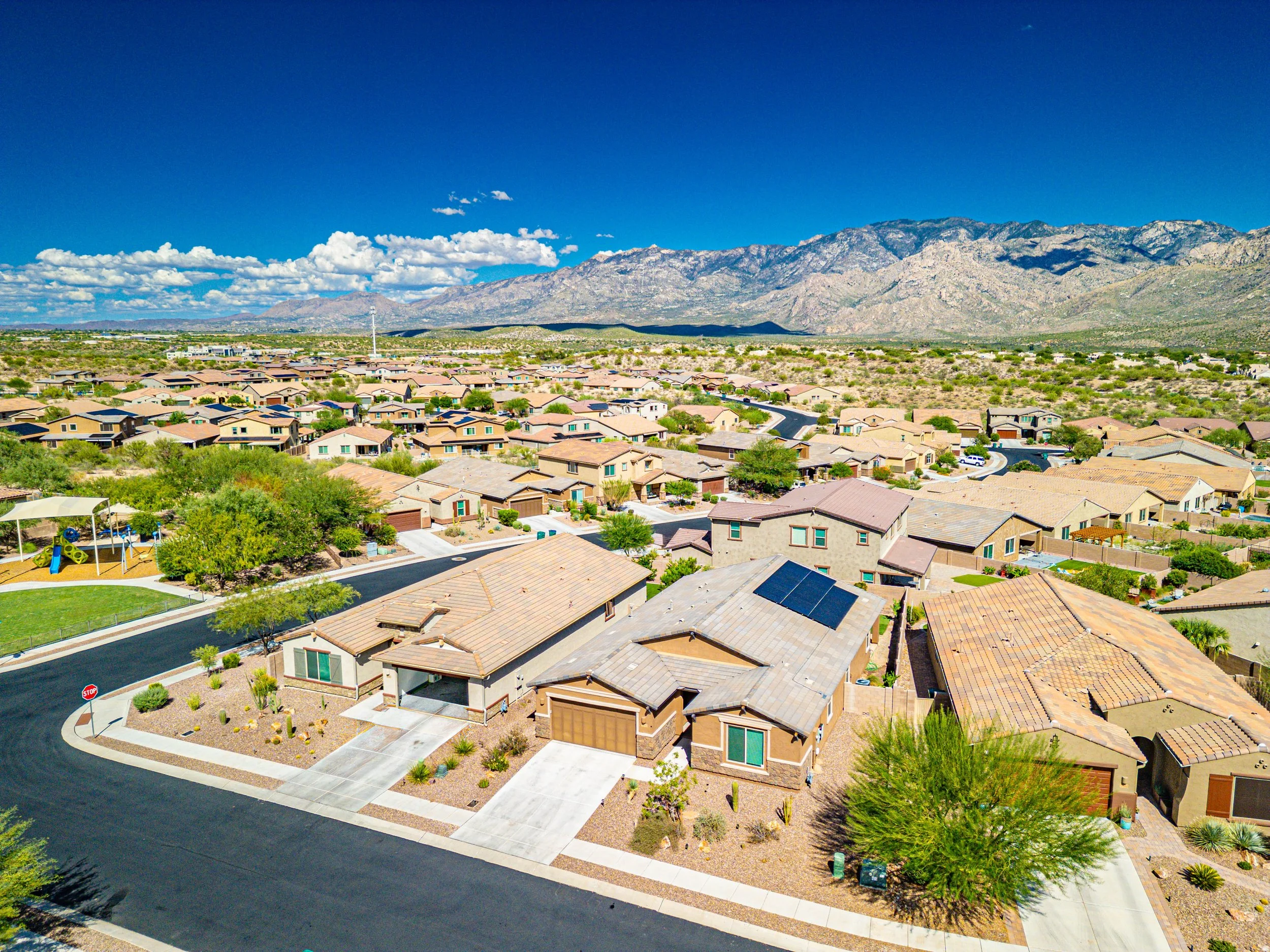
A beautiful Oro Valley neighborhood set against the dramatic backdrop of the Catalina Mountains north of Tucson, Arizona.
Why Are Some Tucson Homes Sitting on the Market Longer?
One of the clearest signs of the changing Tucson real estate market is that many homes are simply taking longer to sell.
There are plenty of reasons a particular home might sit.
Maybe it isn't presented well. Maybe the photos are fantastic, but the home doesn't live up to them in person. The floor plan might not appeal to many buyers. The home could have road noise, an unusual smell, deferred maintenance, or something else buyers don't discover until they walk through the door.
Or—and this is a big one—the home may simply be priced too high compared with the competition.
Most of those problems can eventually be overcome by changing one thing: the price.
Some sellers worry that lowering their asking price makes them look desperate. In my experience working with Tucson home buyers, I don't find that to be true.
In fact, the opposite can sometimes happen.
When my buyers see a home that has been sitting for a long time without a single price adjustment, they may start wondering whether the seller is actually motivated to sell—or whether they're simply unrealistic about what their home is worth.
Of course, every seller has a different motivation.
Someone still comfortably living in their home may have no urgency at all. A seller who has already moved out and is paying expenses on a vacant property may be much more motivated. Someone who inherited a home may have an entirely different financial situation than someone who needs every dollar from the sale to purchase their next home.
But here's what every Tucson home seller needs to understand:
The longer a home sits, the more buyers start asking, "What's wrong with it?"
Fair or not, perception becomes reality pretty quickly in real estate.
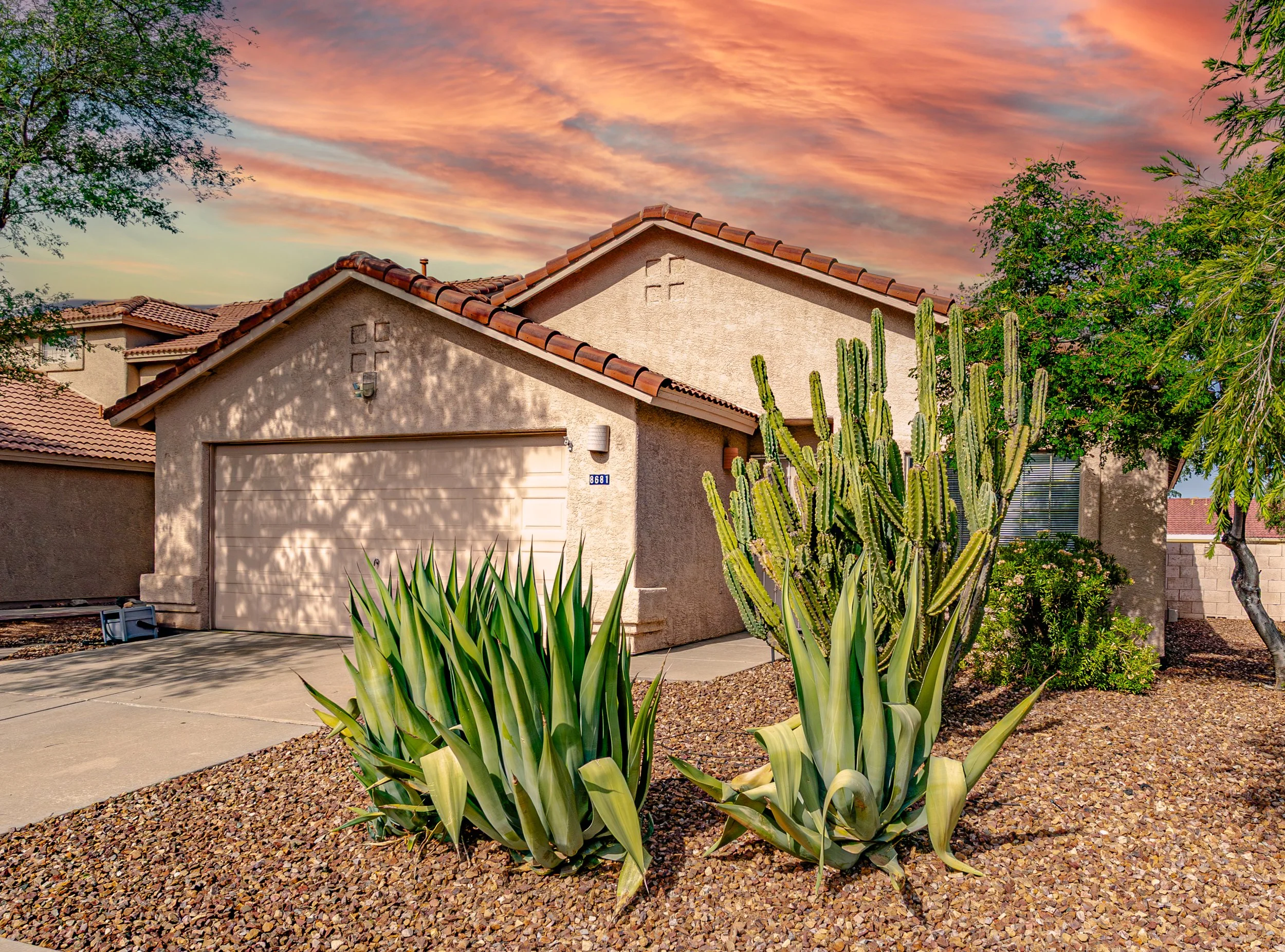
A Southwestern-style home surrounded by beautiful desert landscaping on Tucson’s west side.
New Construction Is Changing the Tucson Housing Market
There's another major factor affecting the Tucson real estate market that I don't think gets enough attention: new construction.
This may be one of the biggest wild cards in our market right now.
Home builders aren't just competing with Tucson resale homes on price. They're competing on the buyer's monthly payment.
That's a huge difference.
Depending on the builder and community, buyers may find incentives such as interest rate buydowns and contributions toward closing costs. Then you add in the appeal of a brand-new home, new appliances and systems, and builder warranties.
That's a pretty attractive package for many buyers.
And it creates a challenge for Tucson home sellers.
If you're selling a resale home in an area with a lot of new construction, buyers aren't necessarily comparing your home only with the resale listing down the street. They may also be comparing it with a brand-new home a few minutes away.
We're seeing this especially in growing areas around Vail, Sahuarita, Marana, Catalina, and Red Rock.
That doesn't mean resale homes can't compete. Far from it.
Resale homes often offer things new construction can't easily duplicate: larger lots, established landscaping, swimming pools, mature trees, more privacy, established neighborhoods, and upgrades that could cost a new-home buyer thousands of dollars to add later.
The key is understanding what makes your home different—and making sure buyers see the value.
There's also some irony here.
During the pandemic housing boom, we would have loved to have had more homes available when Tucson was experiencing tremendous buyer demand.
Now we have significantly more housing competition, including new construction, but we don't have that same frantic level of buyer demand.
For sellers, that's a completely different market.
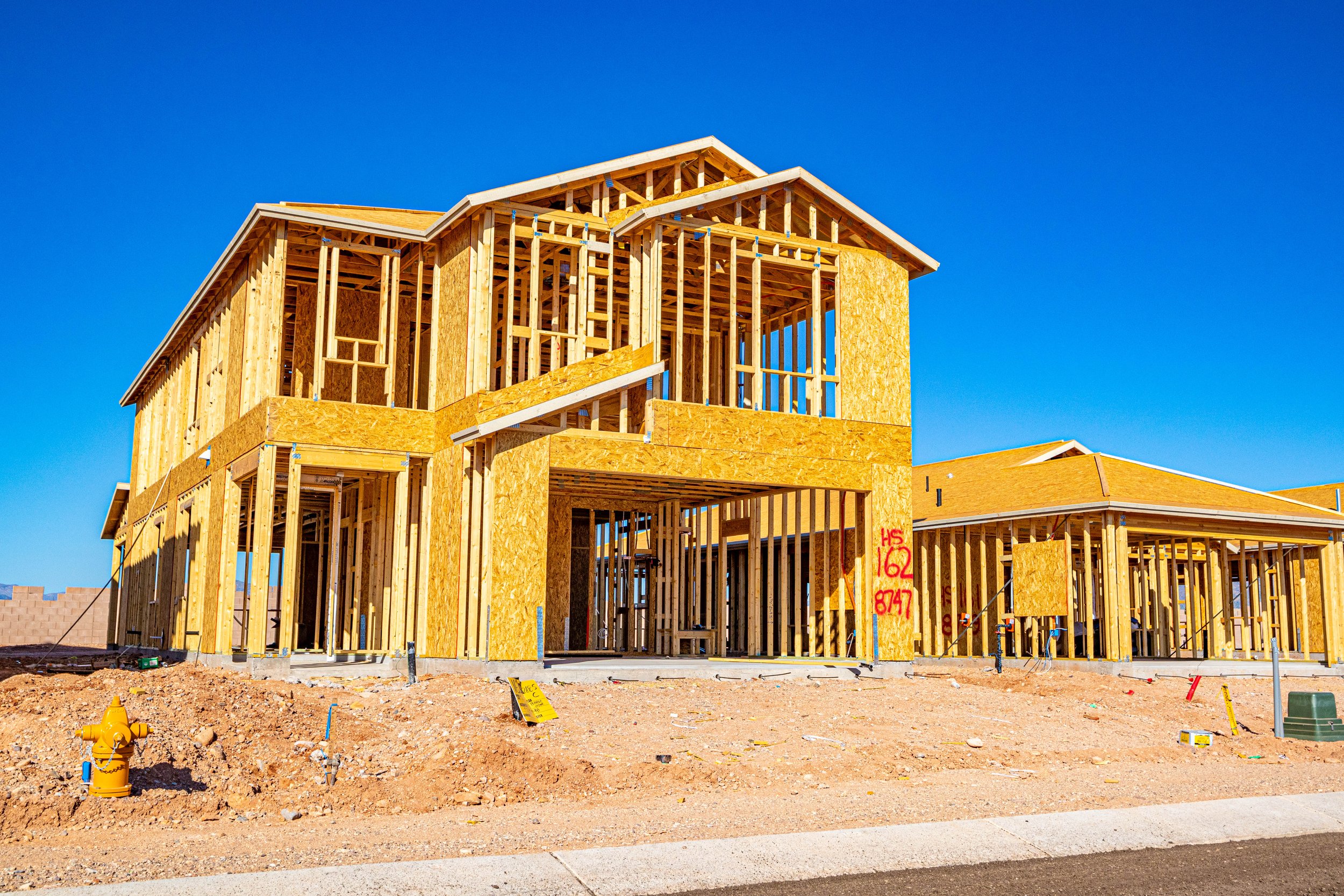
New construction homes taking shape in Tucson, Arizona, as residential development continues across the region.
Is 2026 a Good Time to Buy a Home in Tucson?
If you're thinking about buying a home in Tucson, I think this is a very interesting market.
You have something buyers haven't had much of in recent years: choices, time, and negotiating power.
But there's a catch.
A buyer's market—or even a market that's shifting toward buyers—doesn't mean you should lowball every house you see.
This is one of the biggest mistakes I see buyers make.
If a home is vacant, has been sitting on the market for months, and doesn't have any other offers, you may have a great opportunity to negotiate. Maybe that's on price. Maybe you ask for closing costs. Maybe you negotiate repairs or an interest rate buydown.
Every situation is different, and sometimes the terms of the deal can be just as important as the purchase price.
But let's say a beautiful home just hit the Tucson market. It's priced correctly, it's in a desirable neighborhood, and buyers are already showing interest.
That's probably not the time to submit an offer so low that you immediately turn the seller against you.
The best homes are still selling.
I'm even seeing multiple offers in certain situations.
That's why I tell buyers to be patient, but be ready.
Take your time. Compare your options. Negotiate when the situation gives you leverage.
But when you find the home that's truly right for you, don't assume it will still be there three weeks from now just because the overall market has slowed down.
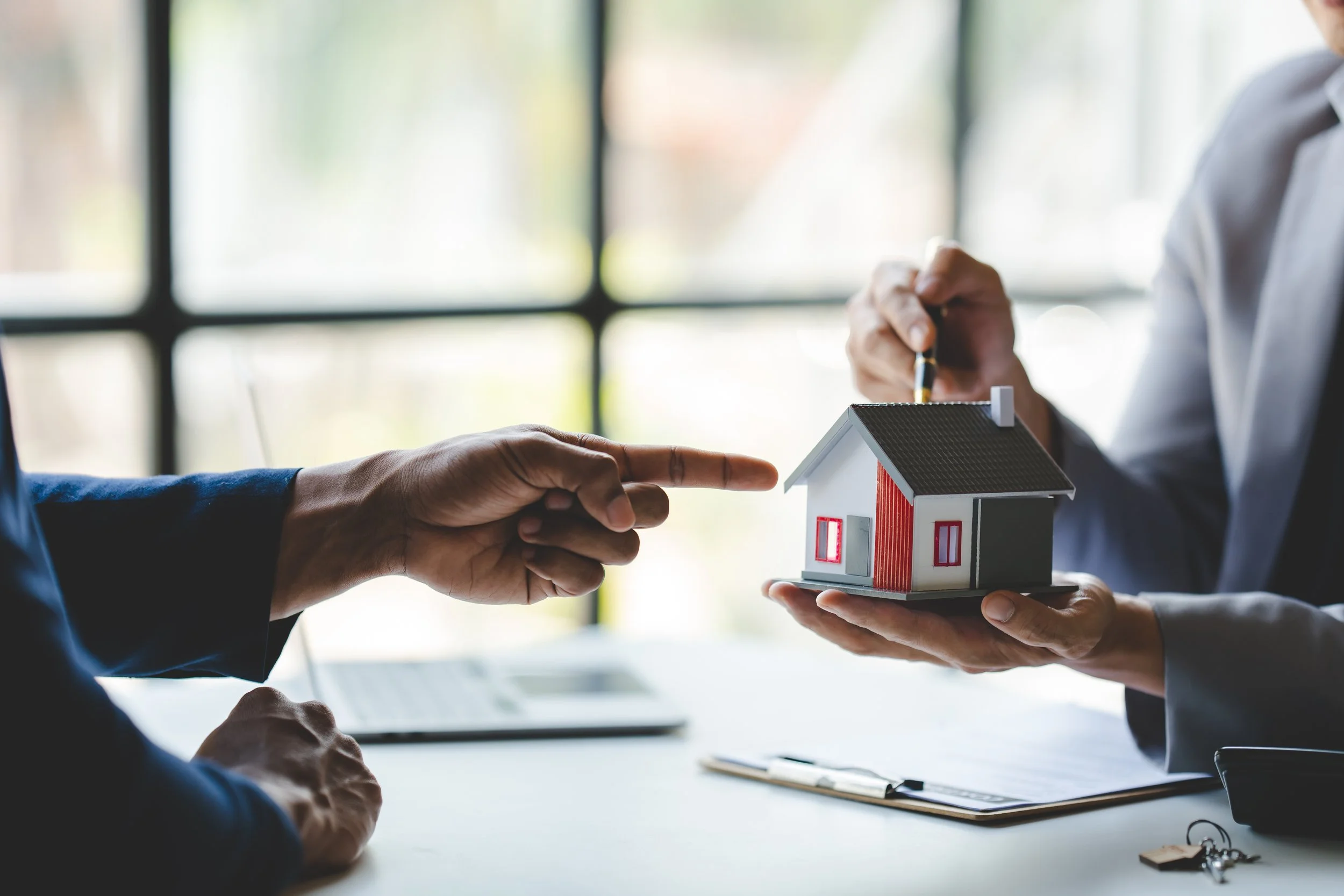
Tucson Home Buyers Have More Negotiating Options
One of the most interesting things about the current Tucson housing market is that negotiations aren't always about lowering the sales price.
Sometimes, buyers get focused on one number: How much can we get them to knock off the price?
But there may be other ways to structure a better deal.
Depending on the home and the seller's situation, buyers may be able to negotiate:
Seller contributions toward closing costs
Repairs completed before closing
Credits for repairs
Interest rate buydowns
Solar panel payoff
Appliances or other items included with the home
Other terms that make the transaction more attractive
The right strategy depends on the property, how long it has been listed, whether there are competing offers, and how motivated the seller is.
That's why I don't believe in using the exact same negotiating strategy on every Tucson home.
Real estate is about understanding the situation in front of you.

What Tucson Home Sellers Need to Know in 2026
Sellers have some adjusting to do in this market too.
One mistake I'm seeing is homeowners pricing their property based on what their neighbor sold for one or two years ago—or even six months ago—without paying enough attention to what's happening today.
Another mistake is pricing based on a personal financial calculation.
For example:
I paid $600,000 for the house. Then I installed a new HVAC system, added landscaping, replaced the flooring, and spent money on other improvements. So I need to sell for $650,000 or $675,000 to make everything back.
Unfortunately, buyers don't determine a home's value based on what the seller needs to get out of it.
The market determines the value.
Depending on when and where you purchased, your home's value may not have increased enough to recover every dollar you've invested into improvements.
That's just the reality of real estate.
In today's Tucson market, sellers need to focus on three things:
Price strategically from day one. Present and market the home exceptionally well. Understand your real competition.
And don't forget that your competition may include new construction.
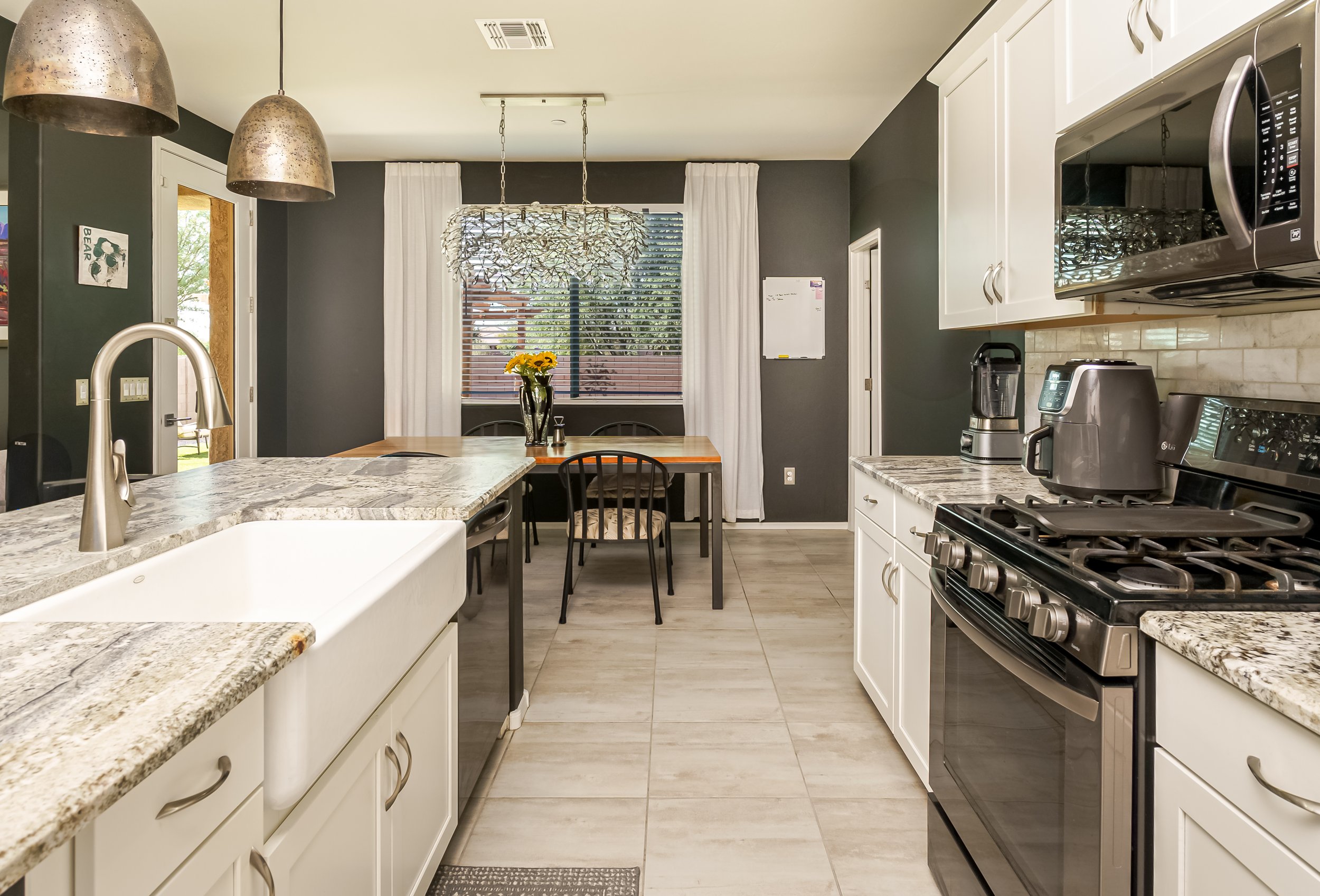
A bright, open-concept living space with a modern kitchen, stylish finishes, and contemporary design in a Tucson, Arizona home.
Is the Tucson Housing Market Crashing?
No, I wouldn't describe what we're seeing as a Tucson housing market crash.
It's a shift.
There is a big difference.
Buyers have more choices. Sellers are facing more competition. Homes may take longer to sell. And we're seeing more negotiations between buyers and sellers.
But great homes in desirable Tucson neighborhoods that are priced appropriately can still sell—and sometimes sell quickly.
The difference is that the market isn't forgiving unrealistic expectations the way it once did.
A few years ago, strong demand could cover up a lot of mistakes.
Overpricing? A buyer might still come along.
Not-so-great photos? There were only five homes available anyway.
Need repairs? Buyers might overlook them because they were afraid of losing the house.
Today, buyers have more choices, and sellers have to compete for their attention.
That's why I believe the advantage in this Tucson real estate market goes to the people who understand what's happening right now—not the people making decisions based on what the market was doing six months, one year, or three years ago.
Thinking About Buying or Selling a Home in Tucson?
I'm Kimberly Mihalka, a Tucson REALTOR® and fourth-generation Tucsonan. I was born and raised here, and I work with buyers and sellers throughout Tucson and the surrounding communities.
One of the things I love most about real estate is helping people understand not only the numbers, but what's actually happening on the ground. What are buyers doing? What are sellers willing to negotiate? Which homes are sitting? Which homes are still selling quickly? And how is new construction changing the equation?
Because those things matter when you're deciding whether to buy a home, sell your current home, or invest in Tucson real estate.
If you're thinking about making a move, I'd love to help you develop a strategy based on your specific situation and today's Tucson real estate market.
And if you're still getting to know Tucson, explore more of my content about Tucson neighborhoods, communities, restaurants, local businesses, things to do, and what it's really like to live in this city I call home.