People visiting Tucson often tell me, “I had no idea the desert could be so green.” I’ve lived here my whole life, and I still love watching the landscape change after rain or burst into color each spring.
From towering cacti to flowering trees, these are 10 plants that give Tucson its unmistakable look—and a few things to know if they’re growing in your yard.
1. Saguaro: The Sonoran Desert’s skyscraper
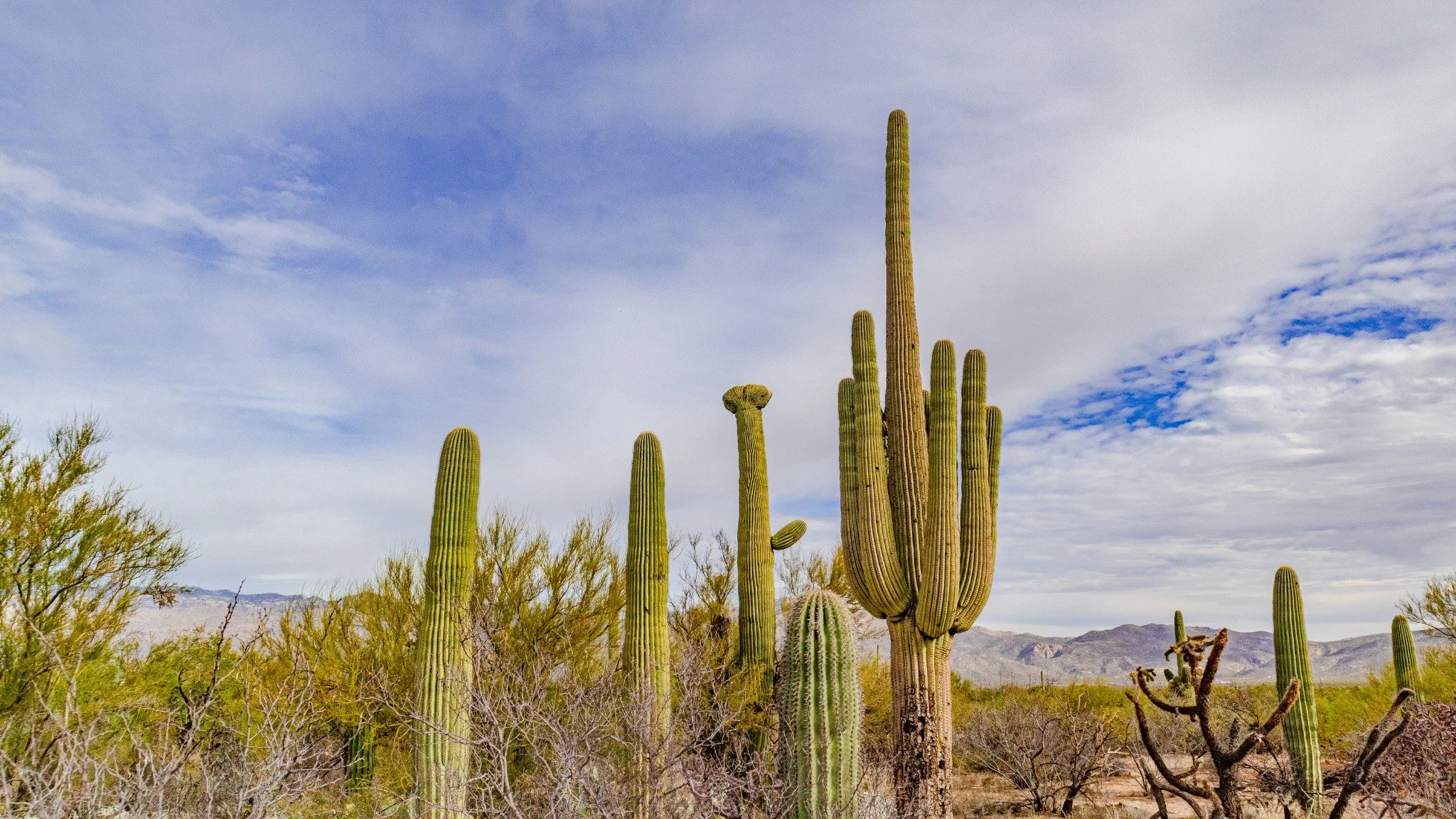
Some saguaros live more than 200 years.
Nothing says Tucson quite like a saguaro. These giants can reach about 50 feet, and some live more than 200 years. They take their time getting there: a first arm typically appears after 50 to 70 years, and in drier places it can take up to 100. nps.gov
Each spring, white flowers open at night and close the following afternoon. The saguaro blossom is Arizona’s state flower, and the red fruit that follows feeds desert wildlife. The fruit also has a long cultural significance for the Tohono O’odham. Saguaro National Park began as a national monument in 1933 to protect an extraordinary stand of these cacti east of Tucson; it became a national park in 1994. nps.gov
For homeowners: A mature saguaro is a remarkable feature of a property. Arizona protects native plants, but the rules are more specific than “you can never move or remove one.” Moving a saguaro from its original growing site generally requires state paperwork, and rules for clearing plants on private residential land have exceptions. Check the Arizona Department of Agriculture’s guidance before making plans. Department of Agriculture
2. Brittlebush: Golden hillsides in spring
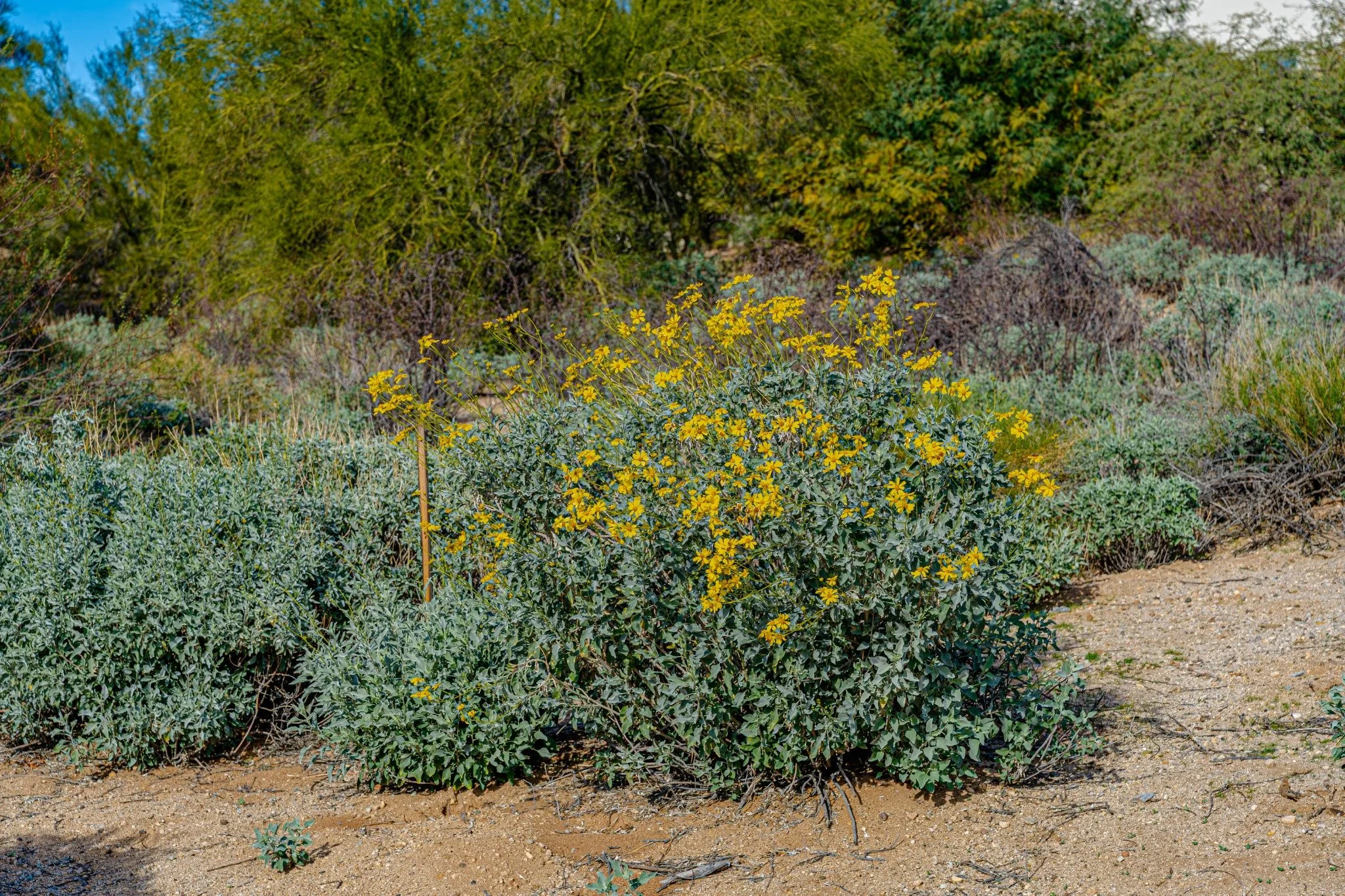
When Tucson’s hillsides turn yellow after winter rain, brittlebush is often part of the show. Its silvery leaves and cheerful flowers look especially beautiful against dark mountain slopes. Bloom depends on rainfall, so every spring brings a slightly different display. Brittlebush
In a yard, it’s a lovely way to bring in a more natural desert look and give pollinators another place to visit.
3. Palo verde: Arizona’s flowering state tree
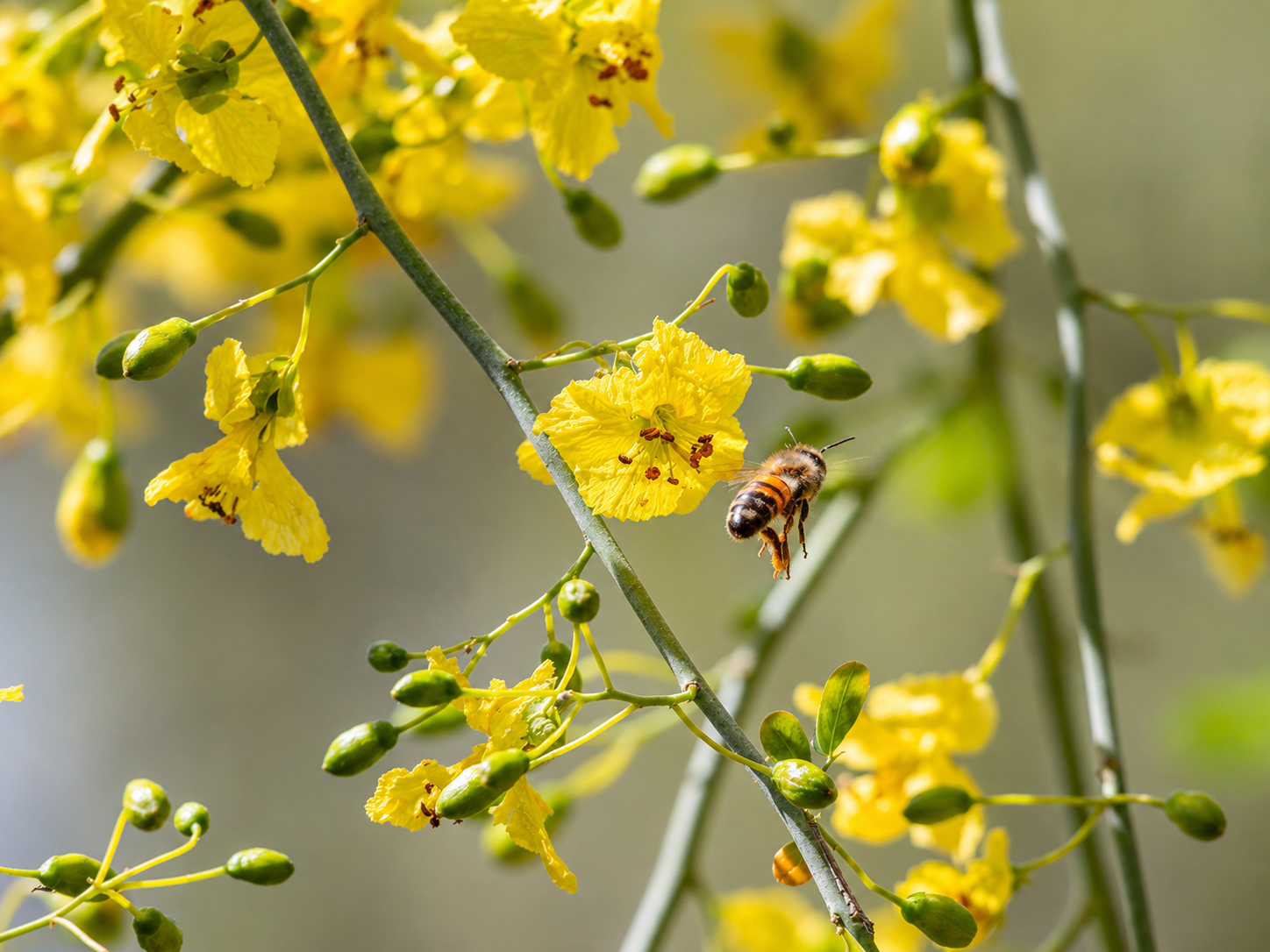
Palo verde blossoms bring color—and pollinators—to Tucson each spring.
A palo verde is easy to recognize by its green bark. In spring, its yellow blossoms can make an entire street look as though someone tossed confetti over it. Palo verde is Arizona’s state tree, and its canopy can provide welcome shade in a Tucson landscape. Arizona State Library
If you’re considering one for your yard, leave room for its mature shape—and expect some flower and seed cleanup beneath it.
4. Mesquite: Shade with a Tucson story
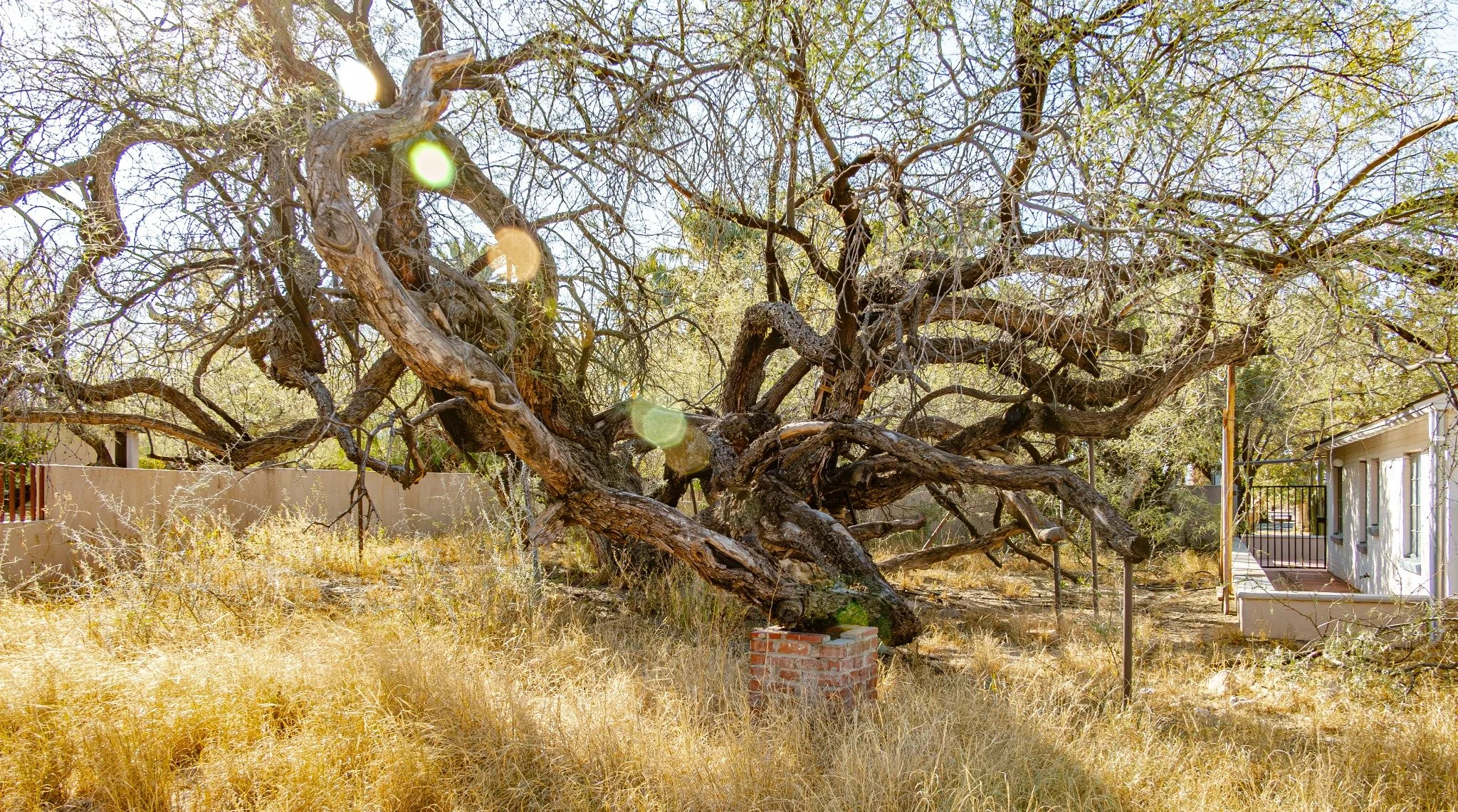
Mesquites have twisting branches, dappled shade, and plenty of character. Their pods have also been an important food source for Indigenous peoples of the Sonoran Desert; dried pods can be ground into a sweet flour that is still used in local foods today. desertmuseum.org
For a homeowner, the tradeoff is simple: beautiful desert shade, with pods and small branches to tidy up seasonally.
5. Creosote bush: The scent of desert rain
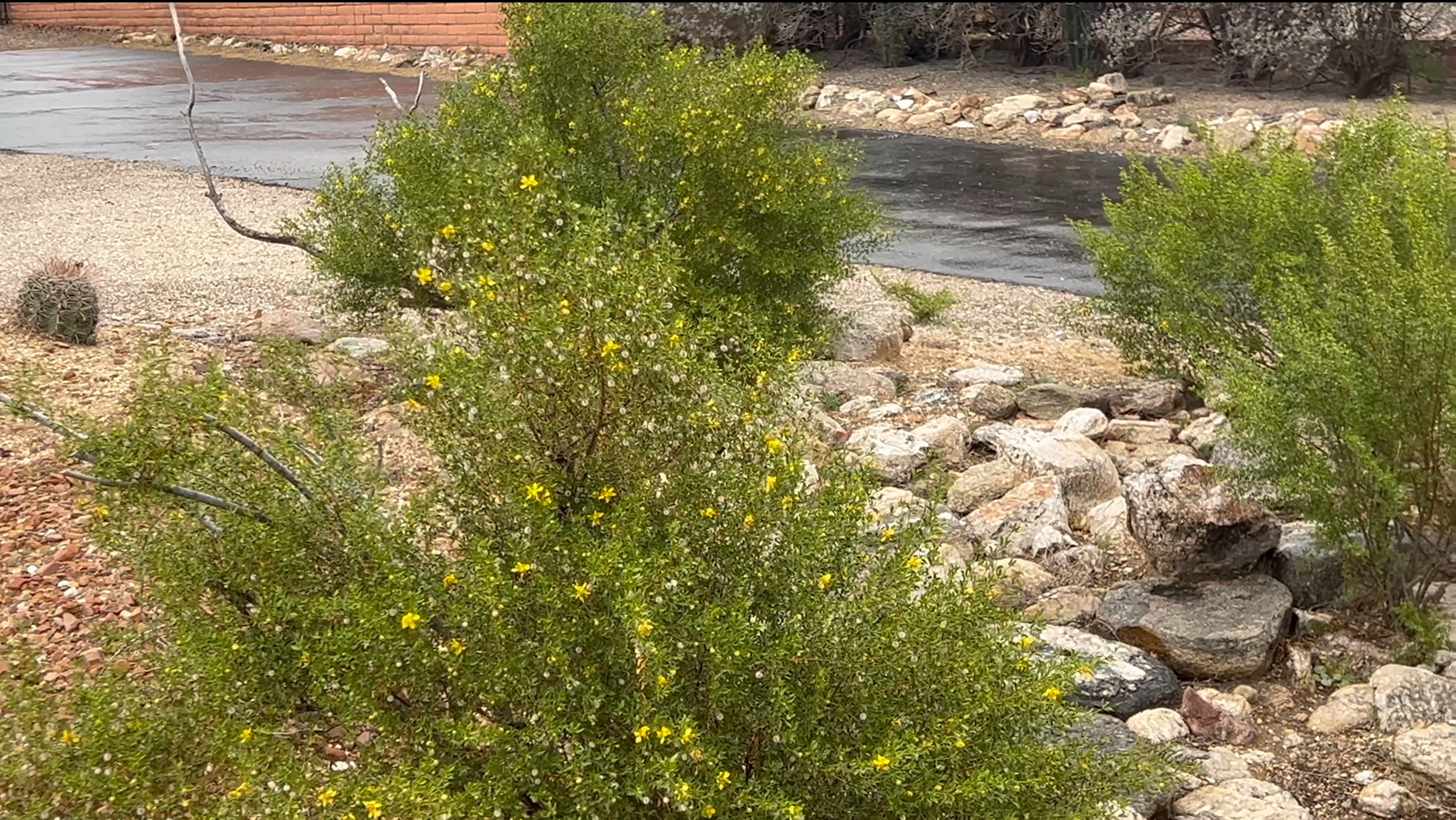
Creosote is one of the plants behind Tucson’s familiar rain scent.
You might walk past a creosote bush without giving it much thought. Then the rain comes, and you recognize that earthy scent so many of us associate with Tucson. Creosote is one of the plants behind it. Creosote Bush
It isn’t the showiest plant on this list, but few capture the feeling of a summer storm quite like it.
6. Cholla: Beautiful from a distance
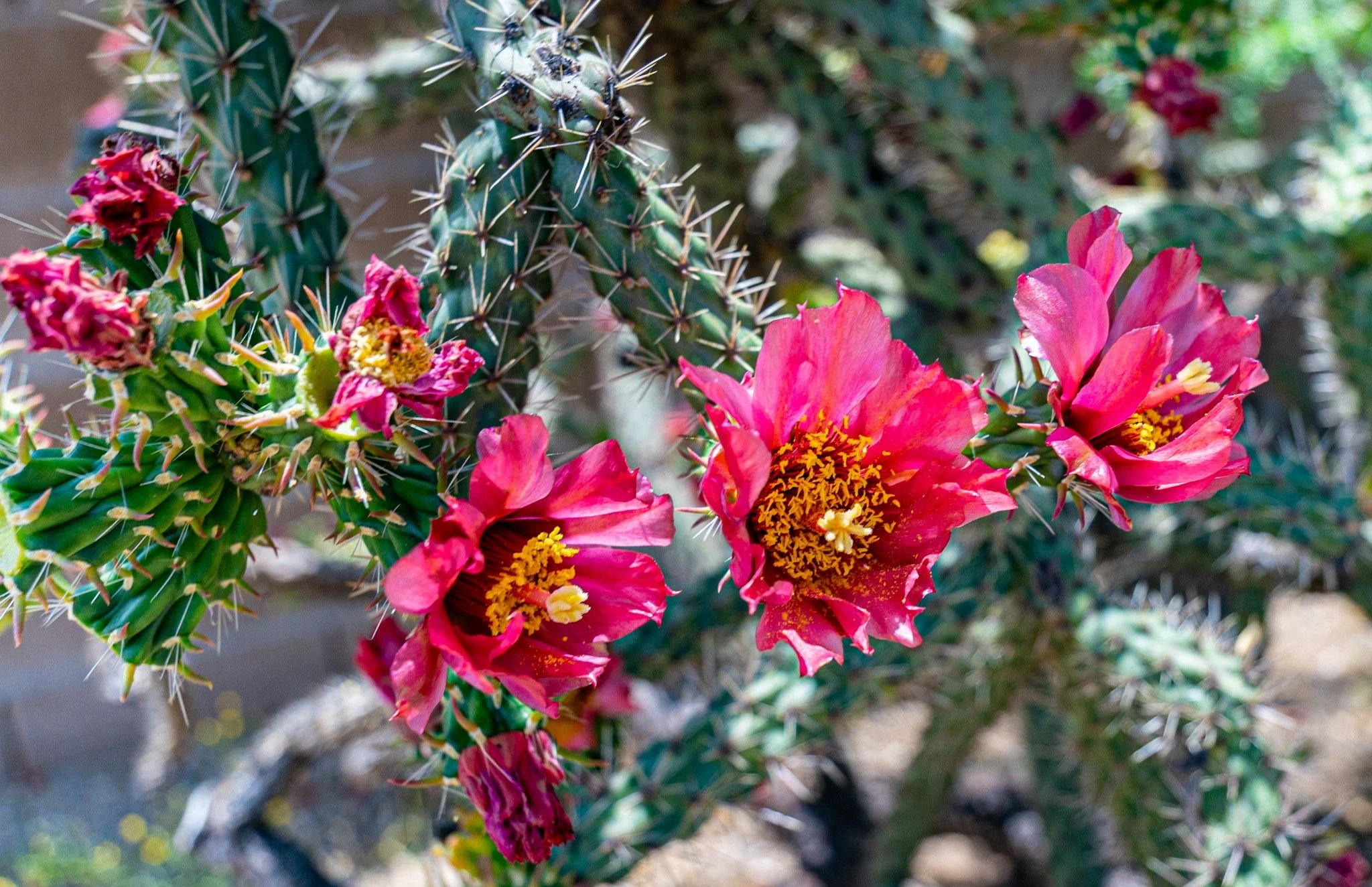
Some chollas are nicknamed “jumping cactus,” though they don’t actually jump. Their spiny stem segments detach readily when something brushes against them—which is reason enough to give them space. In the right light, those spines seem to glow. desertmuseum.org
They’re wonderful to admire on a desert walk. Around a home, think carefully about how close they are to paths, pets, and places where people gather.
7. Agave: Desert architecture
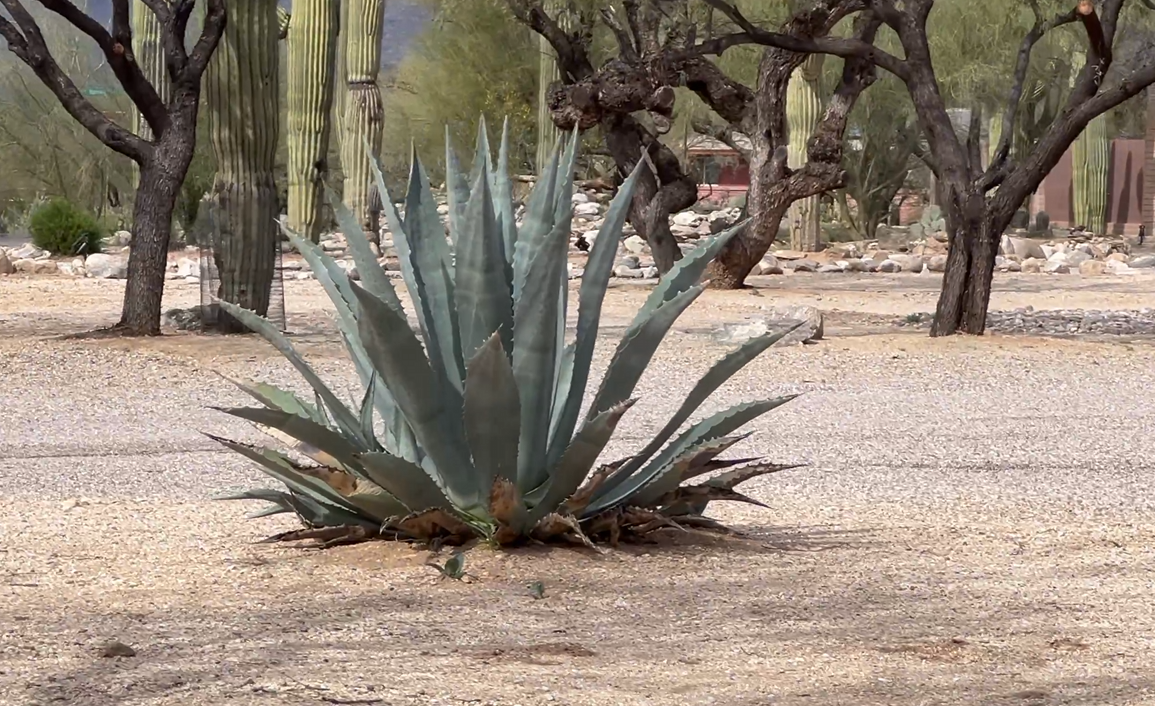
Agaves bring bold shapes to Tucson yards, from compact rosettes to dramatic plants with long, pointed leaves. Many varieties flower once, sending up a tall stalk before the original plant dies. Some produce smaller plants, called offsets or “pups,” that can grow in its place. UA Cooperative Extension
Their sculptural look makes them a natural focal point. Just give those sharp leaf tips plenty of room away from walkways.
8. Desert marigold: A little sunshine after rain
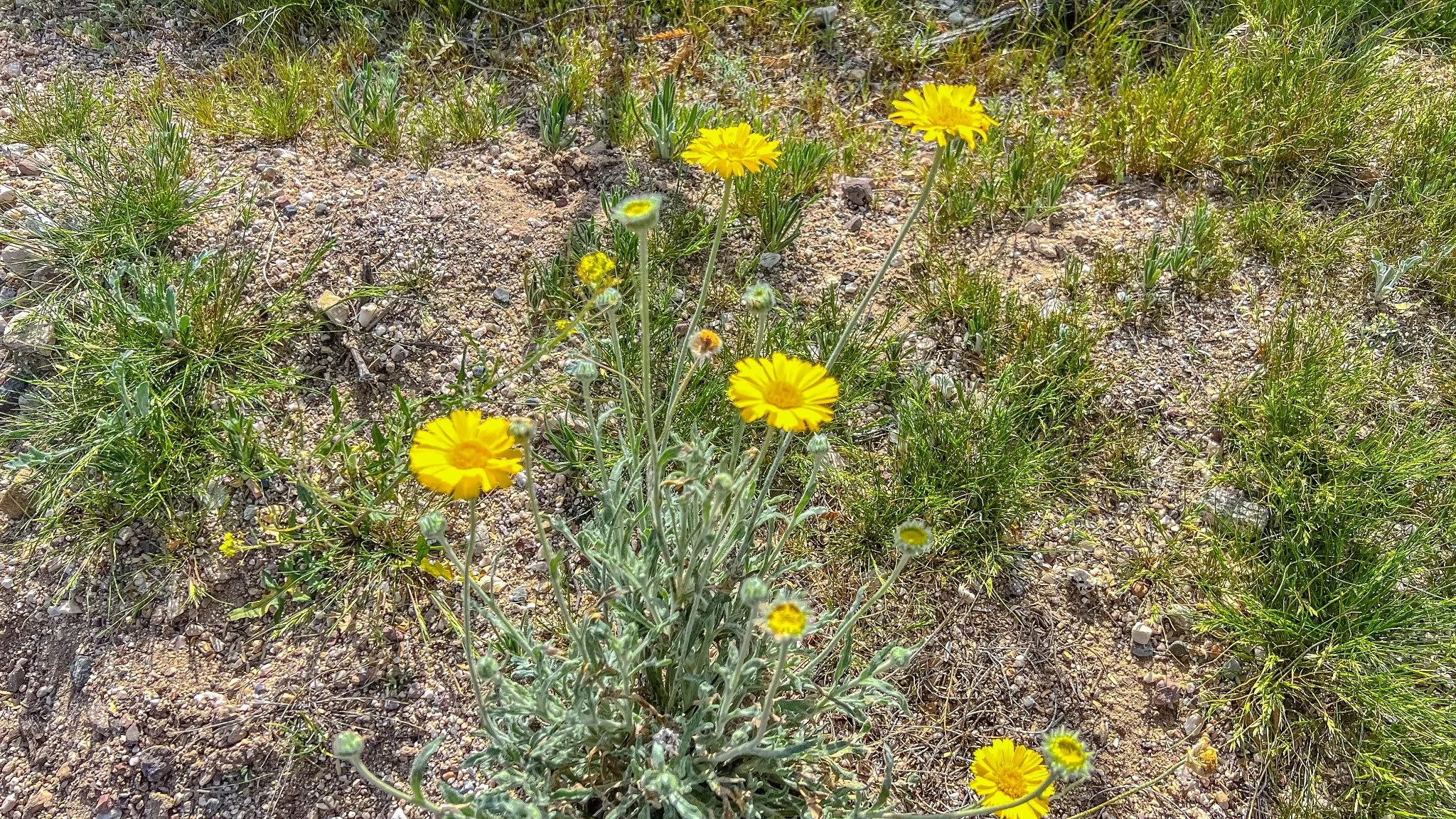
With soft, pale foliage and bright yellow flowers, desert marigold adds color to roadsides and open desert. It can bloom in different seasons after rain, with a particularly lovely showing in spring. desertmuseum.org
It’s a great reminder to look down as well as up when you’re exploring Tucson. Some of our prettiest desert plants stay close to the ground.
9. Red yucca: A hummingbird favorite
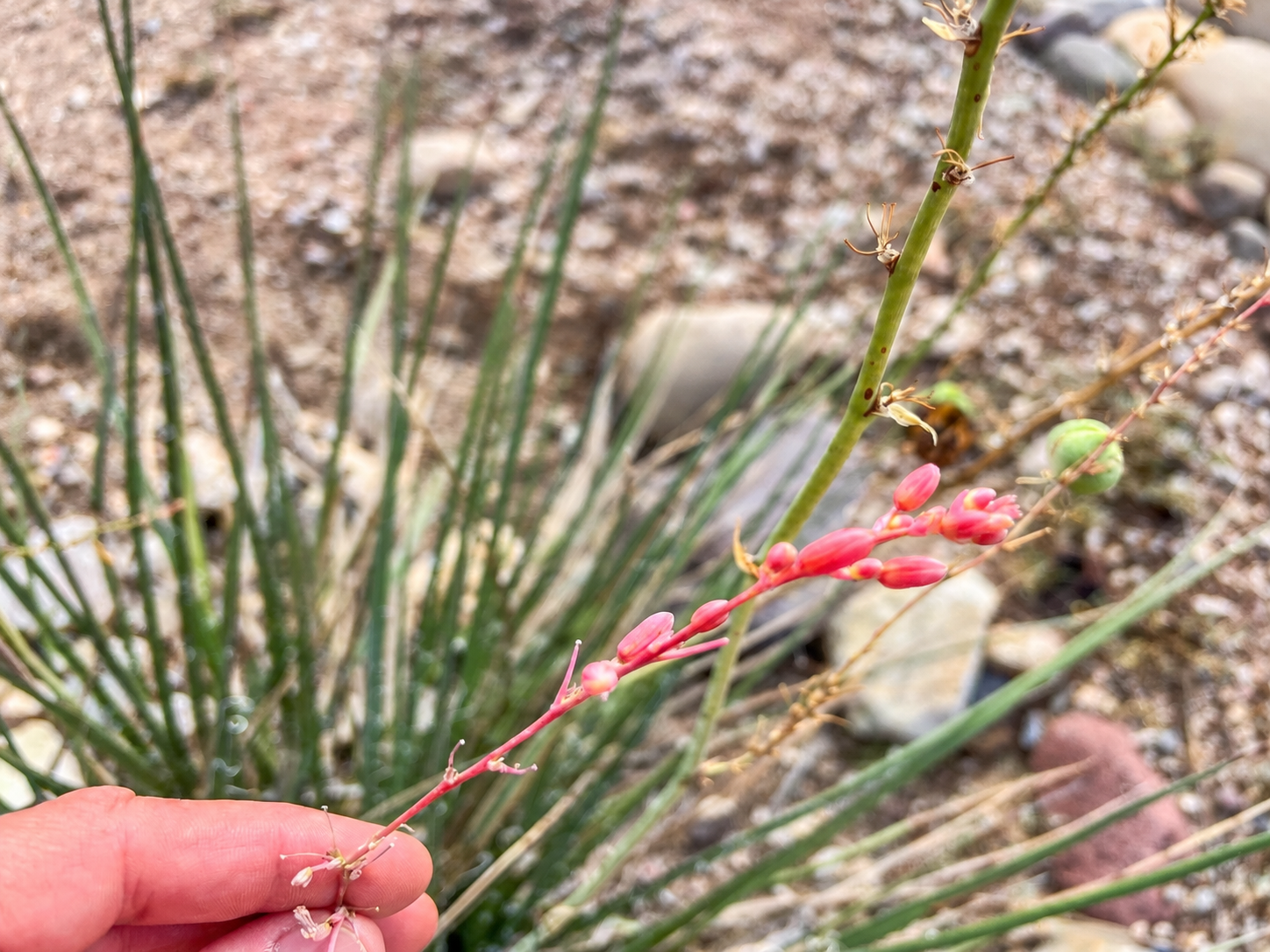
You’ll spot red yucca in Tucson front yards, medians, and commercial landscapes. Despite its name, it isn’t a true yucca. Its slender leaves form a graceful clump, while tall flower stalks add coral color and attract hummingbirds. desertmuseum.org
It’s one of those plants that makes a practical desert landscape feel full of life.
10. Desert willow: Flowers and gentle shade
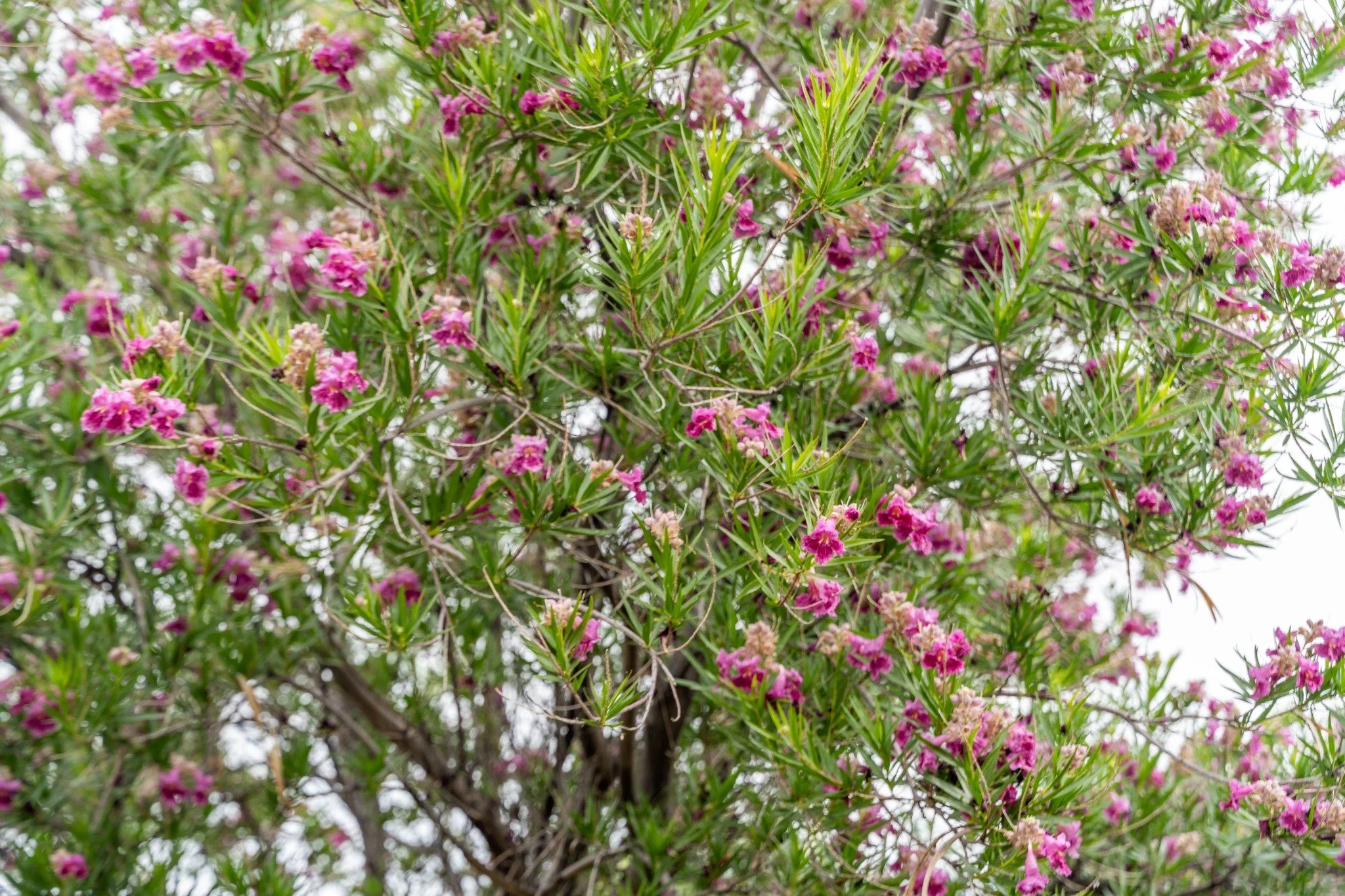
Desert willow isn’t a true willow, either. It’s a small tree with narrow leaves and trumpet-shaped flowers that look almost tropical. Its blooms attract bees and hummingbirds; depending on the tree and growing conditions, flowering can continue well beyond spring. desertmuseum.org
For a Tucson backyard where you want flowers and a smaller tree, it’s one to get to know.
The desert is part of what makes Tucson home
That’s my favorite thing about this landscape: it changes with the rain, the season, and even the time of day. A saguaro flower might be open for only a short while, while a mesquite may shade the same yard for years. Together, these plants make Tucson feel like nowhere else.
I’m Kimberly, a born-and-raised Tucsonan and real estate agent. If you’re exploring Tucson neighborhoods or thinking about buying or selling a home here, I’d love to help you get to know the city.