Stargazing in Tucson: The Best Places to See the Stars
Tucson’s sunsets get plenty of attention, but the view after dark deserves a little love, too. From an evening beneath the desert sky to a closer look at distant galaxies through a powerful telescope, stargazing is one of the most memorable things to do in Southern Arizona.
As a Tucson REALTOR® and someone who calls this city my hometown, I’ve worked with clients who are astronomers by profession and others who simply love watching the stars. I understand the appeal. There’s something pretty special about living somewhere that gives you so many ways to explore the night sky.
Here are several of my favorite places to start.
Why Tucson Is Such a Great Place for Stargazing
Tucson’s desert setting, nearby mountain observatories, and commitment to limiting light pollution all contribute to its astronomy culture. Local outdoor lighting rules help reduce unnecessary sky glow and protect the conditions that astronomical research depends on. They also help residents enjoy the sky while reducing wasted light and energy. Learn about Pima County’s outdoor lighting protections.
That doesn’t mean every Tucson neighborhood has equally dark skies. Streetlights, nearby businesses, weather, and the brightness of the moon all affect what you can see. Head farther from concentrated city lighting, though, and the difference can be remarkable.
On a clear, moonless night in a sufficiently dark location, you may even see the Milky Way stretching across the sky.
Kitt Peak National Observatory
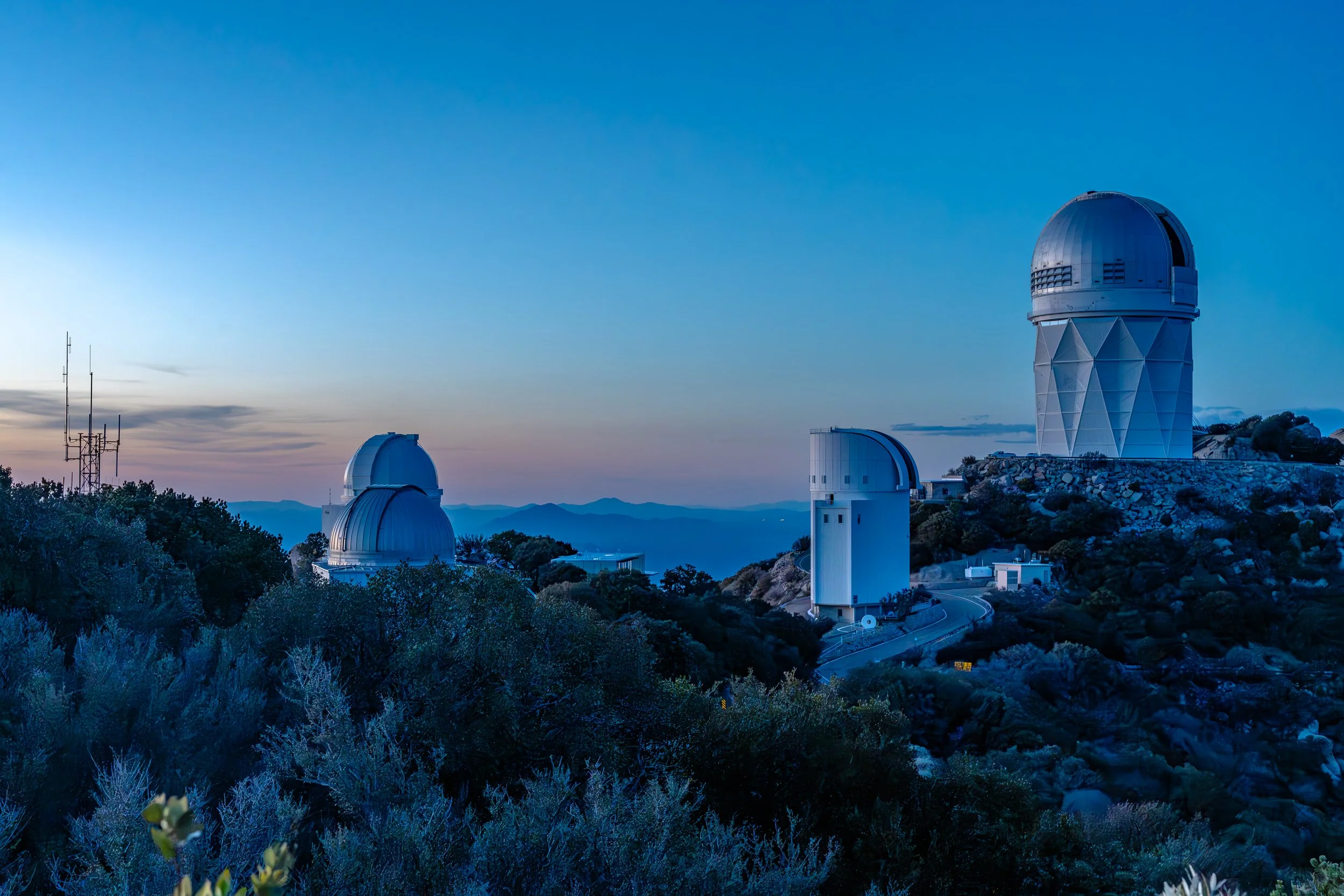
Explore the night sky at Kitt Peak National Observatory, one of Southern Arizona’s standout destinations for astronomy and stargazing.
For an experience that connects Tucson’s night skies with the science happening above us, Kitt Peak National Observatory belongs on your list.
Located southwest of Tucson, Kitt Peak gives visitors an opportunity to experience a working observatory setting through public tours and astronomy programs. Its nighttime offerings include guided observing experiences that introduce visitors to stars, planets, and deep-sky objects. What you see depends on the season, weather, and the program you choose. Explore the Kitt Peak tours and programs.
You don’t need to be an astronomy expert to appreciate a visit. That’s part of what makes this place so interesting, it brings a subject that can feel enormous and complicated within reach.
Book your nighttime program ahead of time and review arrival instructions before making the drive.
Mount Lemmon SkyCenter
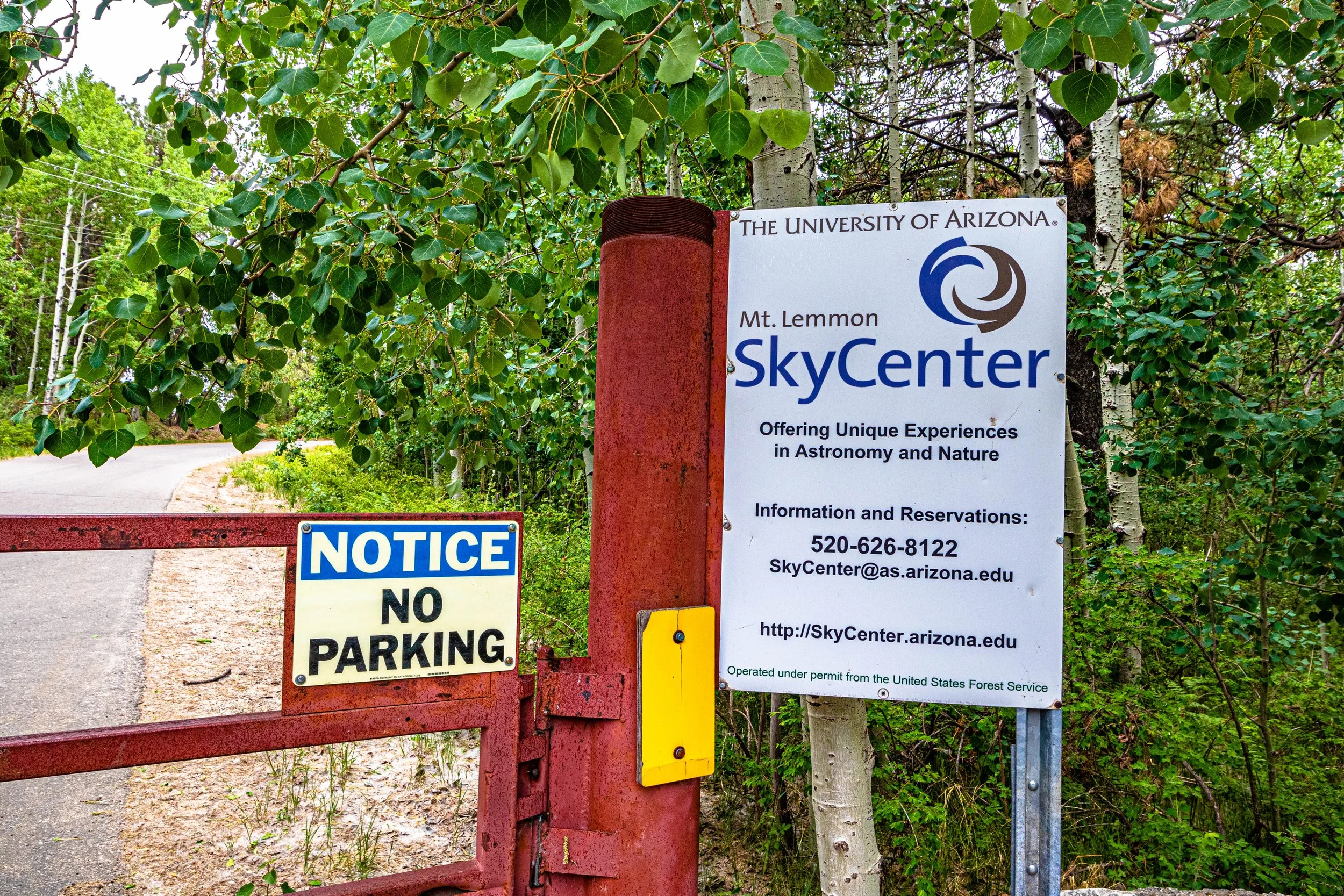
The entrance to Mount Lemmon SkyCenter, where the University of Arizona brings astronomy and stargazing to the mountains above Tucson.
Mount Lemmon SkyCenter offers another wonderful way to experience astronomy in the mountains near Tucson.
Operated by the University of Arizona, the SkyCenter’s SkyNights program combines learning about the universe with telescope observing. Its public programs use impressive instruments, including the 32-inch Schulman telescope, to help visitors explore objects far beyond what they can see with their eyes alone. Check the Mount Lemmon SkyCenter website for current programs and reservations.
This one has a personal connection for me: my kids went on overnight school field trips here in eighth grade. What an incredible opportunity to have so close to home!
Make sure to bring warm layers. An evening high on Mount Lemmon can feel very different from an evening down in Tucson.
Steward Observatory at the University of Arizona
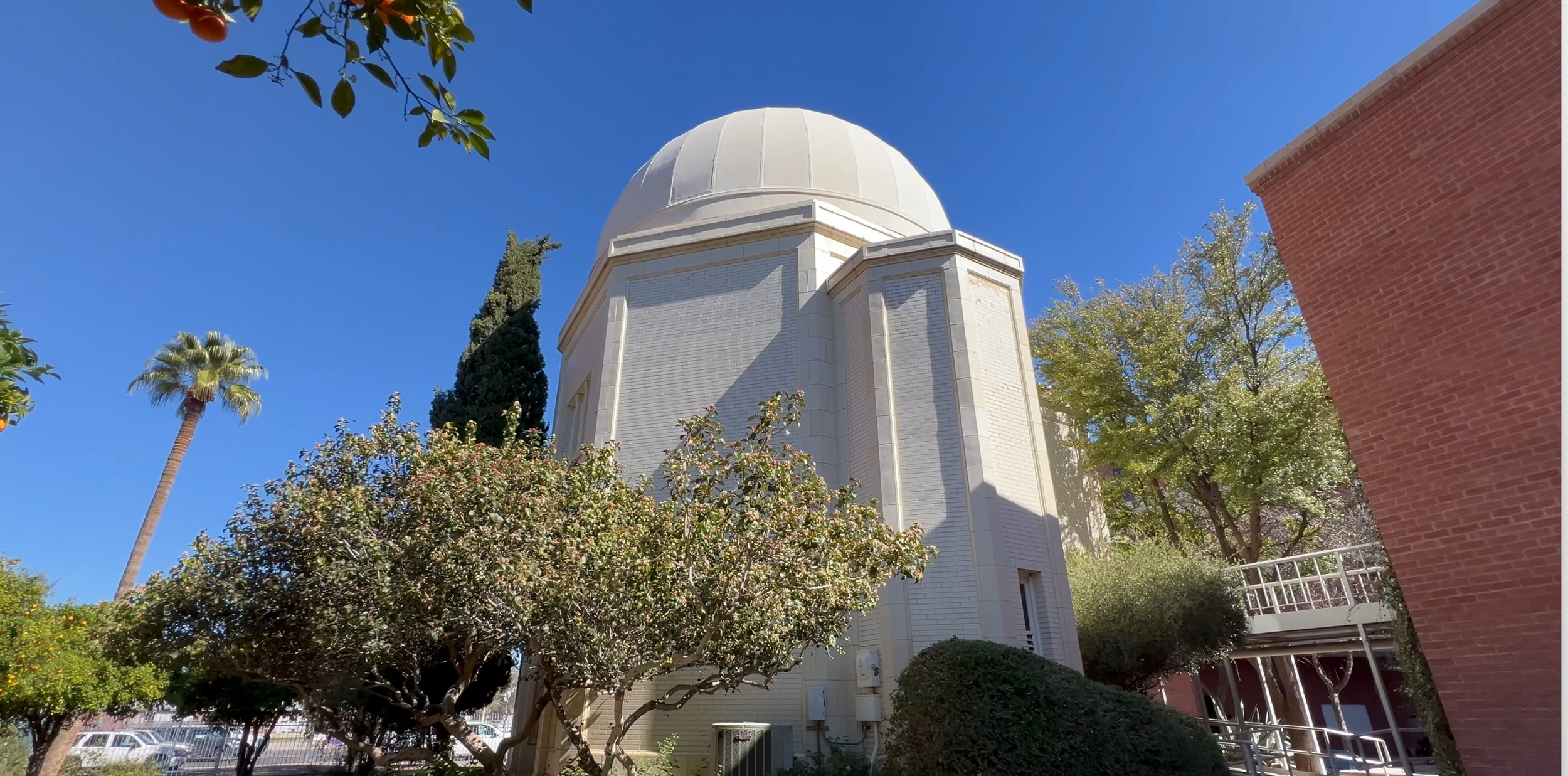
Historic Steward Observatory on the University of Arizona campus, a landmark of Tucson’s long connection to astronomy.
You don’t always have to drive into the mountains to connect with Tucson’s astronomy community.
Steward Observatory at the University of Arizona has a long tradition of sharing astronomy with the public. Its Public Evening Lecture Series combines opportunities to learn about astronomical research with public telescope viewing. The lectures and telescope use are free; check the current schedule and viewing arrangements before visiting. See Steward Observatory’s public evening programs.
For anyone who enjoys learning about the science behind what they’re seeing, this is a great place to start. It’s also a reminder that astronomy is part of everyday life in Tucson, including right on our university campus.
Saguaro National Park
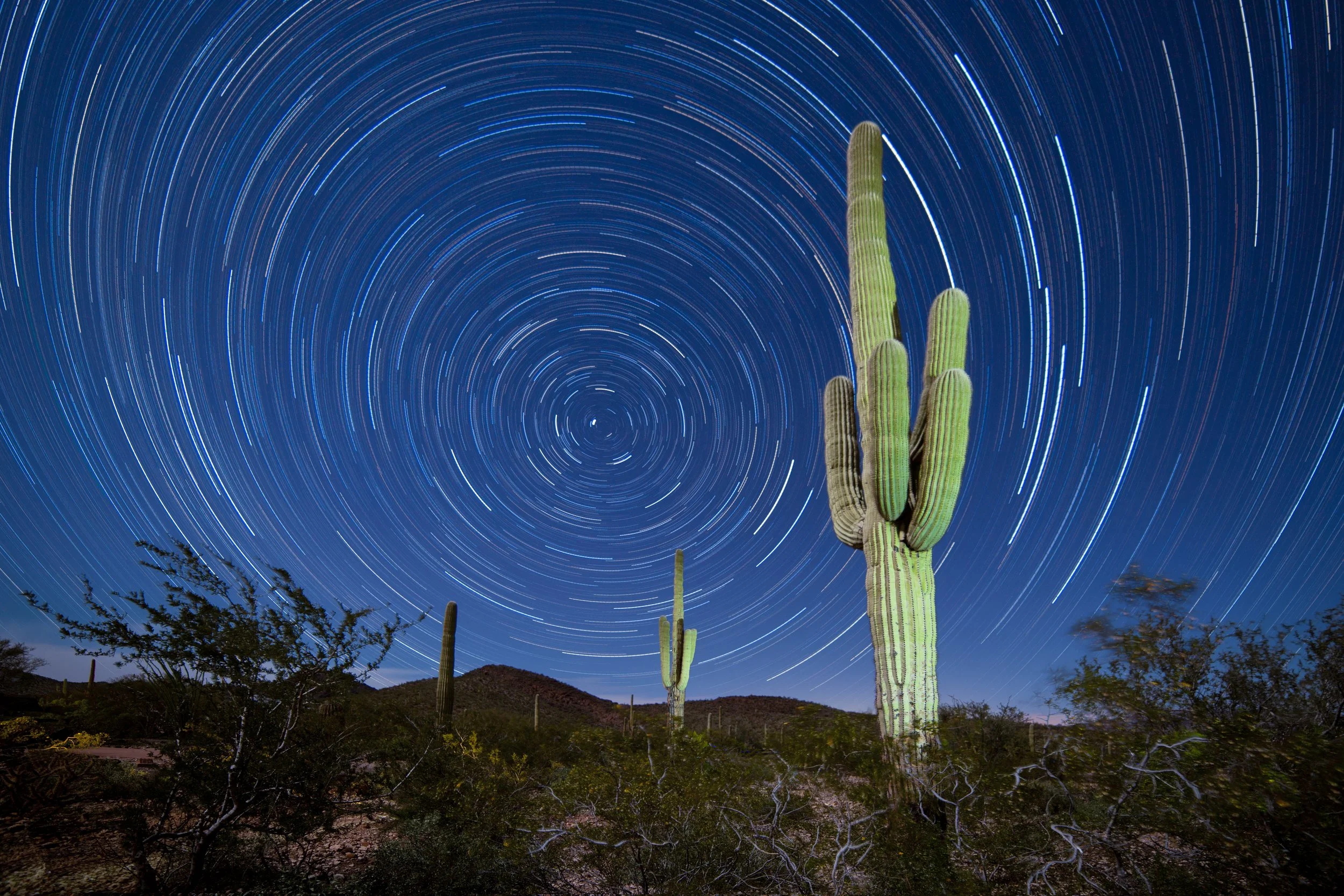
A long-exposure view captures sweeping star trails above saguaros in the desert night.
You don’t need a giant telescope to enjoy a memorable desert night. Sometimes, the setting is just as much a part of the experience as the stars themselves.
Both districts of Saguaro National Park offer that unmistakable Tucson landscape: giant saguaros, mountain silhouettes, and open desert. Imagine watching the sky darken as those familiar cactus shapes turn into silhouettes.
Before planning an evening visit, check the park’s current programs, access rules, and gate hours. Don’t assume that a scenic drive or parking area stays open all night. The park’s hours and visitor information is a good place to begin.
Enjoying the Stars Closer to Home
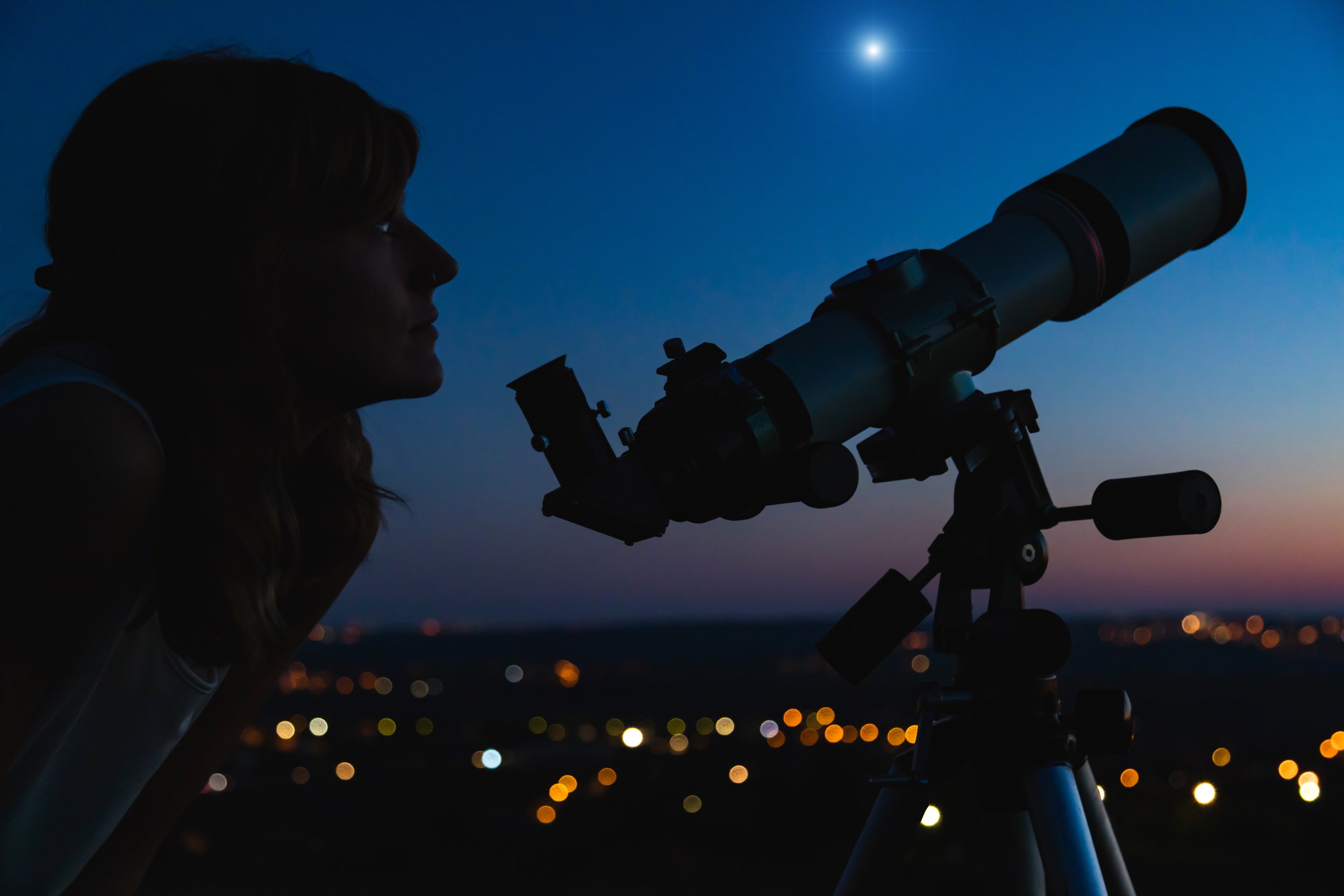
An evening with a telescope offers a closer look at the sky beyond the city lights.
One of my favorite things about Tucson is that enjoying the night sky doesn’t always require a planned outing.
Depending on your neighborhood and nearby lighting, you may be able to step into your backyard and spot bright planets or familiar constellations. For darker views, look for suitable public viewing locations farther from the city’s concentrated lights, including areas toward Oracle or Vail. Always confirm access and respect private property.
Give your eyes time to adjust, put away the bright phone screen, and spend a few minutes simply looking up. You don’t have to identify everything to enjoy it.
Make Tucson’s Night Skies Part of Your Everyday Life
Whether you’re booking an observatory experience, attending a university astronomy event, or enjoying a quiet evening under the desert sky, stargazing offers another reason to appreciate life in Tucson.
And if you’d love to enjoy those desert evenings from a backyard of your own, I’d be happy to help. I’m Kimberly Mihalka with Realty Executives Arizona Territory, and I specialize in Tucson relocation, luxury homes, and listings.
Explore more of Welcome to Tucson Arizona for things to do, see, and know about this city—my hometown—and reach out when you’re ready to buy or sell a Tucson home.

Thinking about making Tucson home?
I’m Kimberly Mihalka, a Tucson REALTOR® with Realty Executives Arizona Territory. Whether you’re relocating, buying, or selling, I’d love to help you make your next move.