10 Best Hikes in Tucson, Arizona: A Local's Guide to Incredible Desert Trails
From desert waterfalls and towering saguaros to cool mountain forests and breathtaking summit views, discover some of the best hiking trails in Tucson, Arizona.
One of the best things about living in Tucson is having some of the most beautiful hiking trails in the Southwest practically in your backyard.
Surrounded by five mountain ranges and the incredible Sonoran Desert, Tucson offers something for just about every kind of hiker. You can spend the morning walking among towering saguaros, discover waterfalls tucked into rocky canyons, or escape into the cooler pine forests of Mount Lemmon.
I'm Kimberly, a fourth-generation Tucsonan and local REALTOR®, and hiking is one of the many reasons my family loves calling Tucson home.
Whether you're visiting, thinking about moving to Tucson, or already living here, these are 10 of our favorite hiking adventures in and around the city.
And stick around for a bonus hike at the end. It's my husband's absolute favorite, although I'll admit it's a little too challenging for me!
Tucson's Best Hiking Trails at a Glance
1. Seven Falls via Bear Canyon Trail
Best for: Desert waterfalls, creek crossings, and classic Tucson scenery
If you're looking for a hike that perfectly captures the beauty of the Sonoran Desert, Seven Falls belongs near the top of your list.
Located in the Sabino Canyon Recreation Area in the Santa Catalina Mountains, this popular trail takes hikers through scenic Bear Canyon, surrounded by towering saguaros, rugged rock formations, and beautiful desert vegetation.
But the real attraction is the series of waterfalls and natural pools tucked into the canyon.
Yes, Tucson really does have waterfalls in the desert!
The hike is approximately eight miles round trip, depending on your starting point and whether you use the Bear Canyon shuttle. Along the way, you'll cross the creek several times, making the journey especially memorable when water is flowing.
Seven Falls is particularly beautiful during the cooler months and following periods of rain, although flowing water isn't guaranteed year-round.
Local tip: Creek crossings can become dangerous during periods of high water. Check conditions before heading out, and never attempt to cross a flooded wash.
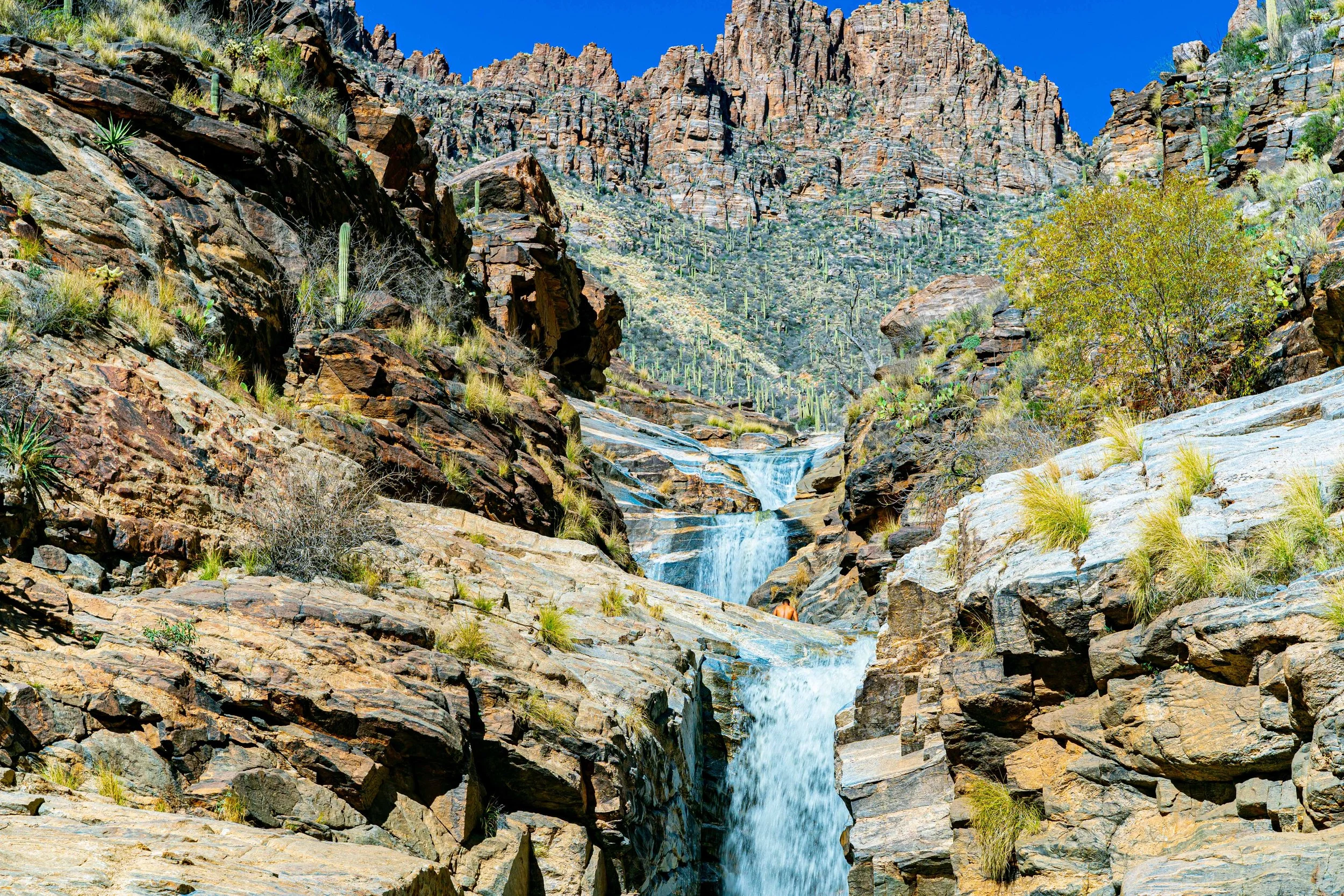
Desert waterfalls are real, and Seven Falls is one of our favorite places to see them near Tucson.
2. Window Peak via Ventana Canyon Trail
Best for: Experienced hikers, spectacular canyon views, and a serious challenge
Ventana means "window" in Spanish, and this trail takes its name from one of the Catalina Mountains' most recognizable natural rock formations.
Window Peak via Ventana Canyon is one of Tucson's most challenging and rewarding hikes.
The full journey is approximately 14 miles round trip with around 4,500 feet of elevation gain, making it an adventure best suited for experienced hikers.
As you climb, the landscape gradually changes from classic Sonoran Desert vegetation to higher-elevation mountain scenery. The views looking back across Tucson become increasingly impressive.
And the best part? You don't have to reach the summit to enjoy this trail.
Even hiking a portion of Ventana Canyon provides incredible views, dramatic rock formations, and a wonderful opportunity to experience Tucson's natural beauty.
The trail passes through the Coronado National Forest, where visitors can find information about wilderness access and current forest conditions.
Local tip: Dogs are not permitted on this wilderness trail. The lower canyon can also become extremely hot during summer, so plan accordingly.
3. Tumamoc Hill
Best for: Sunrise walks, fitness, and panoramic views of Tucson
Looking for a shorter hike that still gets your heart pumping?
Tumamoc Hill is one of Tucson's most recognizable and beloved local walking destinations.
Located just west of downtown Tucson, this approximately three-mile round-trip walk follows a paved road up the hillside.
Don't let the pavement fool you. The climb is steep enough to provide a solid workout!
At the top, you're rewarded with beautiful views of downtown Tucson, the surrounding neighborhoods, and the mountains framing the city.
Tumamoc Hill is also home to a long history of desert ecological research. Researchers associated with the University of Arizona have studied this unique desert environment for generations.
You can learn more about the hill's fascinating research history and visitor guidelines through the University of Arizona's Tumamoc Hill website.
It's especially popular with locals during sunrise and sunset, when the temperatures are cooler and the desert light is spectacular.
Local tip: Tumamoc Hill has designated public walking hours and rules designed to protect ongoing research. Check current access information before visiting.
4. Sabino Canyon Tram Road
Best for: Paved walking, canyon scenery, and family outings
When Tucson locals talk about hiking Sabino Canyon, they could be referring to dozens of different trails.
But one of the most popular places to begin is the Sabino Canyon Tram Road.
This paved route winds through one of the most beautiful desert canyons in southern Arizona, offering views of towering saguaros, rocky mountain slopes, and seasonal flowing water.
Walking the full road and returning to the visitor center area covers approximately 7.5 miles, although you can turn around whenever you like.
There are some steeper sections, but much of the route is relatively manageable, making it a great choice for visitors who want to experience the desert without navigating rugged mountain trails.
Sabino Canyon also offers shuttle services, which can make exploring the area more convenient.
For maps and information about the recreation area, visit the U.S. Forest Service's Sabino Canyon trail map.
Local tip: The Sabino Canyon Recreation Area charges a recreation fee, and shuttle tickets are separate. Check current fees and shuttle schedules before your visit.
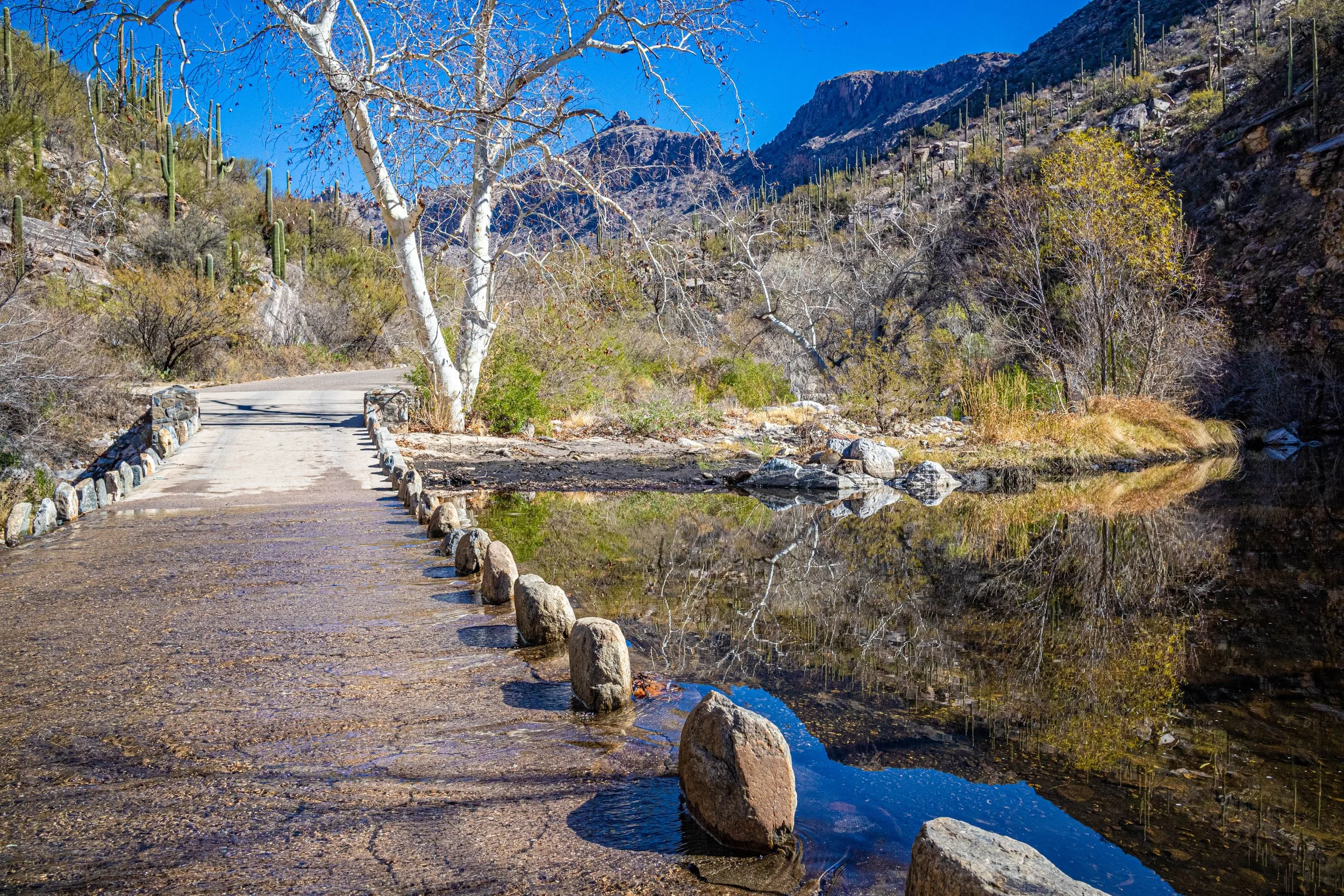
Flowing water, towering saguaros, and rugged canyon walls make Sabino Canyon a Tucson favorite.
5. Wasson Peak via King's Canyon Trail
Best for: Saguaro-filled landscapes and 360-degree desert views
If you want to experience the Tucson Mountains at their finest, consider hiking to Wasson Peak.
At 4,687 feet, Wasson Peak is the highest point in the Tucson Mountains and offers some of the most impressive panoramic views in the area.
Located in the Tucson Mountain District of Saguaro National Park, the route via King's Canyon takes you through a landscape filled with saguaros, prickly pear cactus, ocotillo, and rugged desert terrain.
Depending on your route, expect approximately seven to eight miles round trip with around 1,600 to 1,800 feet of elevation gain.
The climb is steady, with rocky sections and switchbacks, but the views from the summit make the effort worthwhile.
From the top, you'll enjoy sweeping views across the Tucson basin and surrounding mountain ranges.
Local tip: This hike is especially beautiful during the cooler months. Bring plenty of water because shade is limited along much of the route.
6. Picacho Peak State Park
Best for: Adventure seekers, steep climbs, and unforgettable summit views
Driving between Tucson and Phoenix, it's almost impossible to miss the dramatic silhouette of Picacho Peak rising above the desert floor.
But did you know you can hike to the top?
Picacho Peak State Park offers one of southern Arizona's most adventurous hiking experiences.
The popular Hunter Trail is approximately three miles round trip, but the distance doesn't tell the whole story.
This is a steep, rugged hike featuring exposed rock, narrow sections, and cable-assisted climbs that make parts of the journey feel more like scrambling than traditional hiking.
As you climb, the surrounding desert opens up into spectacular views of mountain ranges and wide desert valleys.
Reaching the summit is a genuine accomplishment.
Picacho Peak is also a wonderful place to experience spring wildflowers when seasonal conditions are favorable.
Local tip: . Bring gloves for the cable sections! This is not a good choice for hikers uncomfortable with heights or exposed terrain. Avoid hot weather and check park conditions before visiting.
7. Bug Springs Trail
Best for: Mountain scenery, adventurous hiking, and mountain biking
Bug Springs is one of those trails that deserves more attention.
Located along the Catalina Highway in the Santa Catalina Mountains, this trail offers a wonderful mix of desert landscapes, rocky ridgelines, oak woodland, and sweeping mountain views.
As you climb into higher elevations, the scenery changes dramatically from the lower desert.
The trail features switchbacks, challenging climbs, and several beautiful overlooks.
My husband, who absolutely loves challenging hikes, considers Bug Springs one of the most underrated trails in the Tucson area.
It's also popular with mountain bikers, so hikers should be aware of other trail users.
Because Bug Springs is generally traveled as a point-to-point trail, arranging a shuttle or planning a return route is important.
Local tip: Leashed dogs are allowed. Be prepared for rocky terrain and significant elevation changes.
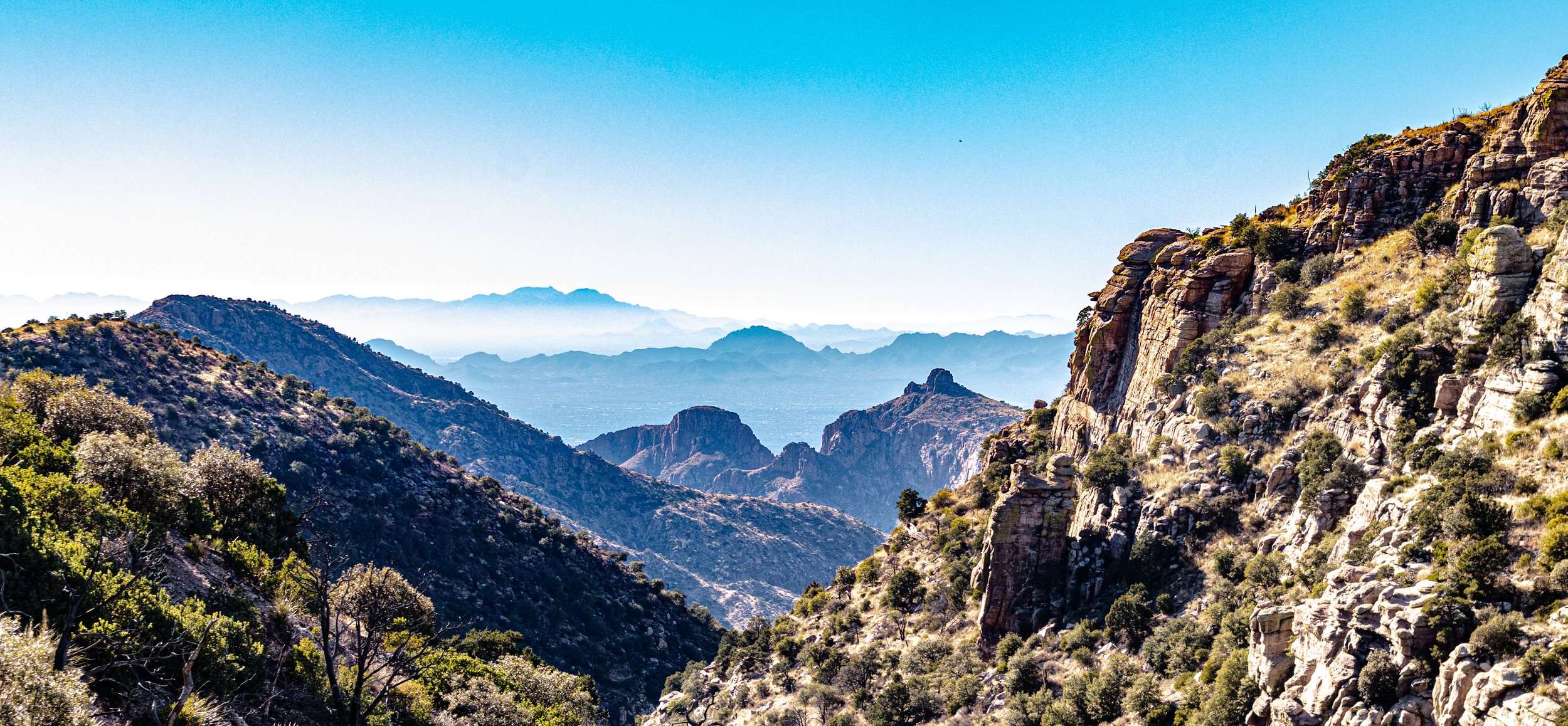
Bug Springs Trail offers rocky mountain scenery and sweeping views above Tucson.
8. Bridal Wreath Falls
Best for: Seasonal waterfalls, wildflowers, and beautiful Rincon Mountain scenery
Another wonderful Tucson waterfall hike is Bridal Wreath Falls in Saguaro National Park East.
Located in the Rincon Mountain District, this approximately six-mile round-trip adventure leads through classic Sonoran Desert scenery toward a seasonal waterfall.
Along the way, you'll enjoy views of the Rincon Mountains, impressive saguaros, and beautiful desert plants.
During certain times of the year, wildflowers add even more color to the landscape.
When conditions are right, water cascades over the rocks at Bridal Wreath Falls, creating a beautiful contrast against the surrounding desert.
The elevation gain is generally manageable for moderately experienced hikers, although there are some steeper and rockier sections.
For more information about hiking in this part of the park, explore the National Park Service's Saguaro hiking guide.
Local tip: The waterfall is seasonal. Visit during cooler weather and check recent conditions if seeing flowing water is your main goal.
9. Agua Caliente Hill Trail
Best for: A challenging workout and sweeping mountain panoramas
If you're ready for a more demanding hike, Agua Caliente Hill offers a rewarding adventure on Tucson's northeast side.
This approximately nine-mile round-trip trail begins with a steep climb, including sections of rocky steps that will definitely get your heart rate going.
Eventually, the terrain opens into scenic high meadows and ridgelines, providing opportunities to enjoy views of the Santa Catalina and Rincon Mountains.
The route includes several significant climbs, making it more challenging than its distance might suggest.
One interesting feature along the way is an old reservoir, a reminder of the area's history.
The combination of rugged desert vegetation, open hillsides, and mountain views makes Agua Caliente Hill a favorite for hikers looking for a serious workout.
Local tip: Dogs are allowed on portions of this trail system, but leash requirements vary by land jurisdiction. Check current rules and bring extra water, as exposed sections can get very hot.
10. Butterfly Trail on Mount Lemmon
Best for: Cool mountain temperatures, forests, wildflowers, and history
One of the things I love most about Tucson is how quickly the scenery changes when you head into the mountains.
The Butterfly Trail in the Santa Catalina Mountains is a perfect example.
Located high on Mount Lemmon, this beautiful trail winds through pine forests, mountain meadows, and scenic ridgelines.
At roughly 5.5 miles one way, it offers a longer adventure for hikers wanting to escape the desert heat and enjoy a different side of southern Arizona.
Depending on the season, you may encounter wildflowers, butterflies, and beautiful views of the surrounding mountain peaks.
But there's something else that makes this hike especially interesting.
Hidden among the trees are remnants of a military aircraft that crashed in the mountains decades ago.
The wreckage provides an unexpected piece of history along an already memorable hiking route.
Local tip: Mountain weather can change quickly, and portions of the trail may be affected by snow, fallen trees, or seasonal closures. Respect the historic wreckage and leave artifacts undisturbed.
Bonus: Mount Wrightson via the Super Trail — My Husband's Favorite!
Best for: Experienced hikers seeking a serious mountain adventure
I couldn't finish this list without mentioning my husband's favorite hike in southern Arizona.
Mount Wrightson, located in the Santa Rita Mountains south of Tucson, is the highest peak in the Tucson area's surrounding mountain ranges.
At an elevation of 9,453 feet, it's even taller than Mount Lemmon!
The Super Trail begins near beautiful Madera Canyon and climbs through oak woodland, pine forests, and increasingly rugged mountain terrain.
As you gain elevation, the scenery becomes more dramatic, with expansive views across southern Arizona.
The upper portions of the hike feature steep terrain, rocky sections, and impressive ridgelines.
Reaching the summit rewards hikers with extraordinary 360-degree views of the surrounding mountains and desert valleys.
It's an unforgettable adventure, but one that requires preparation, endurance, and experience.
My husband absolutely loves it.
Me? I'll happily enjoy some of Tucson's less intimidating trails!
Before planning a summit hike, check the Coronado National Forest website for current conditions and access information.
Local tip: Mount Wrightson can experience snow, ice, high winds, and rapidly changing weather. Always check conditions and select a route appropriate for your experience level.
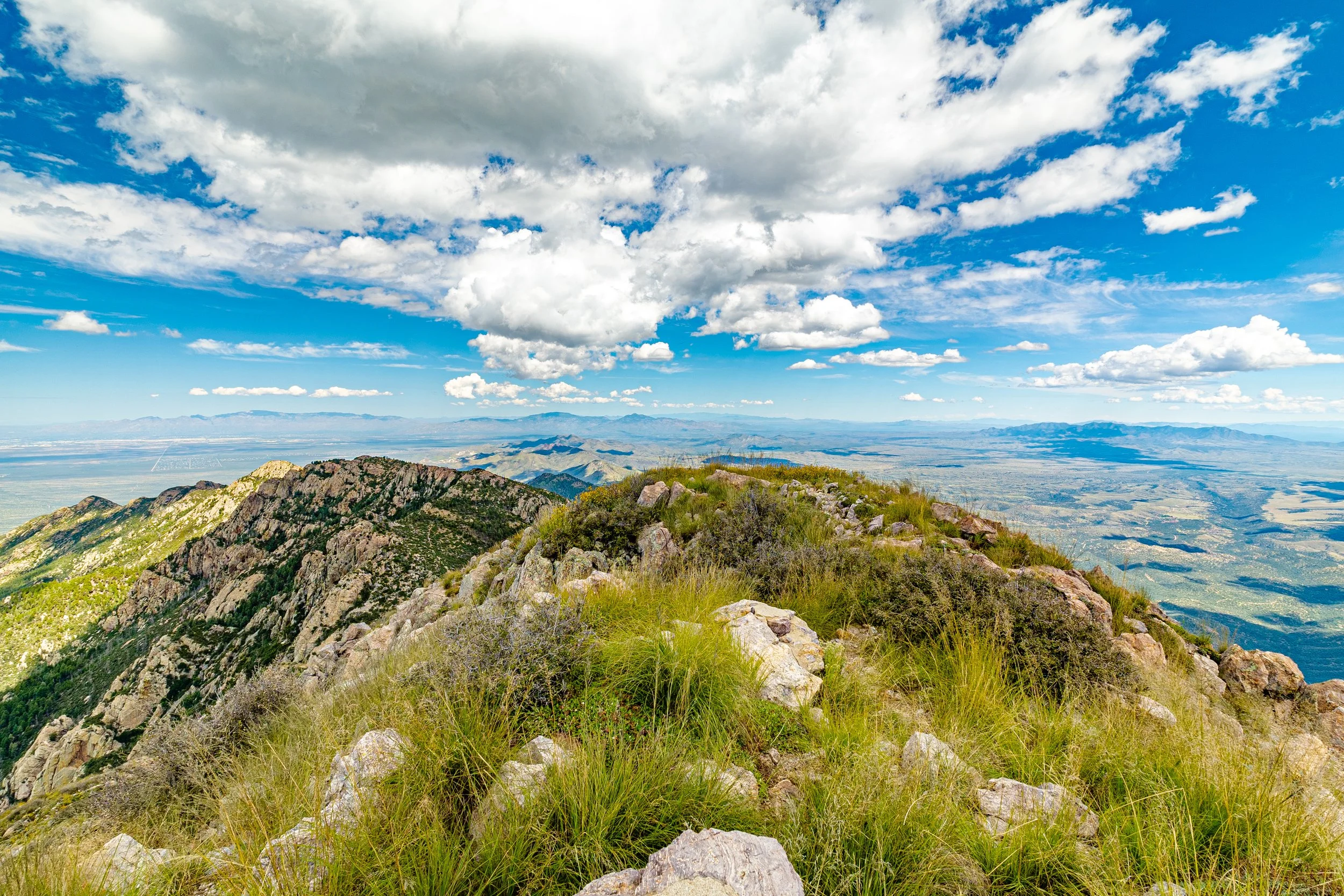
The reward for climbing Mount Wrightson: expansive views across southern Arizona.
When Is the Best Time to Hike in Tucson?
One of Tucson's biggest advantages is the variety of hiking environments available throughout the year.
Fall through spring is generally the best time for lower-elevation desert hikes such as Seven Falls, Wasson Peak, Tumamoc Hill, and Picacho Peak.
Cooler temperatures make longer adventures much more comfortable, and spring can bring beautiful desert wildflowers.
Summer is a wonderful time to explore higher-elevation trails around Mount Lemmon, where temperatures are often considerably cooler than in the city below.
However, summer also brings monsoon storms, lightning, and flash-flood risks.
Regardless of the season, one of my favorite pieces of advice is to start early.
And I mean sunrise early!
Not only will you enjoy cooler temperatures and fewer crowds, but you'll also have a chance to watch the Sonoran Desert come alive.
Birds begin singing, wildlife becomes active, and the morning sunlight creates beautiful colors across the mountains.
There's something pretty magical about Tucson in the early morning.
Essential Tucson Hiking Tips
Before heading out, remember a few important things:
Bring more water than you think you'll need. Tucson's dry climate can be deceptive, even during cooler months.
Protect yourself from the sun. Sunscreen, a hat, and appropriate clothing are essential.
Check the weather. Avoid exposed trails during extreme heat and watch for thunderstorms or flash flooding.
Know your limits. Some trails involve substantial elevation gain, loose rock, or exposed sections.
Research trail rules. Dogs, bicycles, parking, and access requirements vary by location.
Leave no trace. Protect the desert plants, wildlife, and natural landscapes that make Tucson special.
Trail distances, access, fees, and conditions can change, so check official park and forest information before beginning your hike.
Why Hiking Is One of the Best Parts of Living in Tucson
For me, hiking is about more than exercise.
It's about spending time with family, exploring the incredible place we call home, and appreciating the natural beauty that makes Tucson so special.
And it's one of the things I love sharing with people considering a move to southern Arizona.
Few cities offer such easy access to such dramatically different landscapes.
You can hike among giant saguaros in the morning, explore a desert waterfall, or head into the mountains for a walk through a cool pine forest.
Whether you prefer the scenic foothills of the Catalina Mountains, the rugged Tucson Mountains, or the quieter trails around the Rincons, outdoor recreation is a huge part of the Tucson lifestyle.
And for many homebuyers, having beautiful hiking trails nearby is an important consideration when choosing where to live.
If you're exploring the area, our guide to moving to Tucson, Arizona is a great place to learn more about what makes this city such a special place to call home.
Thinking About Moving to Tucson?
If you're considering making Tucson your home, I'd love to help you discover everything this city has to offer.
I'm Kimberly Mihalka, a fourth-generation Tucsonan and local REALTOR® specializing in relocation, luxury homes, and residential real estate throughout Tucson and its surrounding communities.
My family and I love exploring Tucson, and sharing that local knowledge is one of my favorite parts of helping people find their place here.
Whether you're interested in the Catalina Foothills, Oro Valley, Vail, Sabino Canyon, or another Tucson neighborhood, I can help you explore the communities, homes, and lifestyle that fit your needs.
You can explore more local restaurants, outdoor adventures, Tucson history, neighborhood information, and real estate insights at Welcome to Tucson AZ.
We also have more than 1,000 videos about Tucson and real estate on our YouTube channel, featuring everything from local businesses and attractions to neighborhoods and homes throughout the area.
If you're thinking about buying or selling a home in Tucson, I'd love to hear from you.
Disclaimer: This article is intended for general informational purposes. Trail conditions, distances, access rules, and weather can change. Always consult official land-management resources and assess your fitness, equipment, and experience before hiking.